Category: Public Service Announcement

  • Making Families Safer from Button Cell or Coin Battery Dangers; Reese’s Law Leads to New Federal Mandatory Safety Standard

    WASHINGTON, D.C. – The U.S. Consumer Product Safety Commission (CPSC) voted to approve a mandatory standard to reduce button cell and coin battery ingestion hazards to children six years and younger. These batteries are used in many types of consumer products from keyless entry remotes and wireless game controllers to toys and musical greeting cards. Pursuant to Reese’s Law, CPSC voted to adopt the voluntary standard, ANSI/UL 4200A-2023 Standard for Safety for Products Incorporating Button Batteries or Coin Cell Batteries, as the mandatory consumer product safety rule for consumer products containing button cell or coin batteries. The Commission also established labeling requirements for button cell or coin battery packaging, to warn of the ingestion hazard to children.

    Protecting Children

    The stakes are high and the consequences of a child swallowing a button cell or coin battery can be immediate and deadly. These tiny batteries can burn through a child’s throat or esophagus in as little as two hours if swallowed. From 2011 through 2021, CPSC is aware of 27 deaths and an estimated 54,300 injuries treated in emergency rooms associated with ingested or inserted button cell or coin batteries.

    Reese’s Law & ANSI/UL 4200A-2023

    Reese’s Law, enacted August 16, 2022, mandates that CPSC implement federal safety requirements for button cell or coin batteries and consumer products containing such batteries. These requirements do not apply to toy products for children under 14 if the products comply with the Toy Standard. Additionally, the law requires that any button cell or coin battery offered for sale, manufactured for sale, imported into the U.S., or included separately with a consumer product, meet the child-resistant packaging requirements in the Poison Prevention Packaging Standards after February 12, 2023. These packaging requirements do not apply to button cell or coin batteries manufactured or imported on or before February 12, 2023. Consistent with Reese’s Law, ANSI/UL 4200A-2023 requires either the use of a tool such as a screwdriver or coin to open the battery compartment, or the application of at least two independent and simultaneous movements to open by hand; additionally, such consumer products must pass a series of performance tests simulating reasonably foreseeable use or misuse. The standard also includes labeling requirements for consumer products containing button cell or coin batteries, and labeling requirements for consumer product packaging.

    Safeguard children by taking control of button cell or coin batteries. 

    • Keep products with accessible batteries away from children if the battery compartments do not have a screw closure to secure them.
    • If the battery compartment is damaged, replace the product as soon as possible, repair or dispose of the product.
    • Toys with button cell or coin batteries are required to have a secure closure requiring a screwdriver, coin, or tool to open.
    • Check the toys in your home to make sure battery compartments are secured.
    • Do not allow children to play with or be in contact with button cell or coin batteries.
    • Call the National Battery Ingestion Hotline (800-498-8666) or the Poison Help Line (800-222-1222) immediately for treatment information if you suspect a child has swallowed or is exposed to button cell or coin batteries.

    Immediately take children who are suspected of having swallowed button cell or coin batteries to the nearest emergency department. The National Capital Poison Center recommends giving honey to children 12+ months on the way to the emergency room to reduce injury in the critical time between ingestion and when the battery can be properly removed. Do not delay going to the emergency room to obtain or give them honey. Give 10mL of honey every 10 minutes only for children 12+ months who have ingested button batteries in the past 12 hours. Do not exceed six doses of honey.

    Commissioner Statements:

    Chair Alex Hoehn-Saric

    Commissioner Peter Feldman

    Commissioner Richard Trumka

  • CPSC Warns Consumers to Immediately Stop Using iCraves Infant High Chairs Due to Suffocation, Entrapment, and Fall Hazards; Failure to Meet Federal Safety Standards

    Release Date: August 31, 2023

    Release Number: 23-273

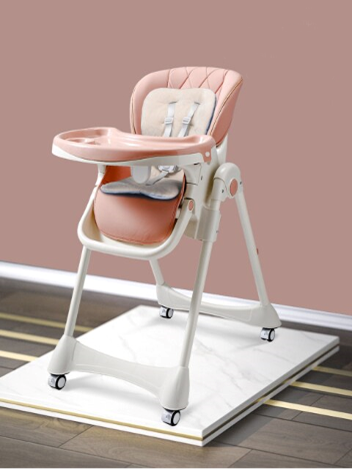
    WASHINGTON, D.C. – The U.S. Consumer Product Safety Commission (CPSC) is warning consumers to immediately stop using iCraves high chairs because they do not comply with federal safety standards for high chairs and for infant sleep products and pose a suffocation risk, as well as entrapment and fall hazards to infants.

    The high chairs fail to meet performance requirements under the mandatory safety standard for high chairs, posing entrapment and fall hazards. The high chairs also fail to meet the safety requirements of CPSC’s Infant Sleep Products Rule and the Safe Sleep for Babies Act, because they were marketed for infant sleep and have an incline angle greater than 10 degrees, posing a suffocation risk. The high chairs and their packaging also lack a tracking label containing certain required information, such as the date of manufacture, which is required for children’s products including durable infant or toddler products.

    The seller, Brosishop Ltd, of United Kingdom, doing business as iCraves, has been unresponsive to CPSC requests to recall the high chairs.

    The high chairs were sold online at www.icraves.com for about $260. However, the website is no longer operational. The high chairs were sold in the following colors: peach pink, green, purple, and blue. The high chairs contain a recline feature to allow the baby to sleep. Bestbaby and model BS-806 are listed on the packaging. All labeling on the high chairs are in Mandarin.

    CPSC urges consumers to stop using the high chairs immediately, disassemble the seat from the frame, cut the padding, and dispose of all the parts separately.

    Report any incidents involving injury or product defect to CPSC at www.SaferProducts.gov.

    Individual Commissioners may have statements related to this topic.  Please visit www.cpsc.gov/commissioners to search for statements related to this or other topics.
  • CPSC Warns Consumers to Immediately Stop Using Iraza High-Powered Magnetic Ball Sets Due to Ingestion Hazard

    Release Date: August 17, 2023

    WASHINGTON, D.C. – The U.S. Consumer Product Safety Commission (CPSC) is warning consumers to immediately stop using Iraza 512 Piece Magnetic Stone 5mm Magnetic Ball Sets DIY Creative Magnetic Beads because the loose, hazardous magnets pose a risk of serious injury or death if ingested.

    CPSC testing revealed the Magnetic Stone 5mm Magnetic Ball Sets DIY Creative Magnetic Beads violate the requirements of the mandatory federal safety standard for magnets. When high-powered magnets are swallowed, the ingested magnets can attract to each other, or to another metal object, and become lodged in the digestive system. This can result in perforations, twisting and/or blockage of the intestines, infection, blood poisoning and death.

    The seller, Guanjia Trading Co. of China, has not responded to CPSC’s Notice of Violation letter seeking a recall of this product and has not offered a remedy to consumers.

    The Iraza 512 Piece Magnetic Stone 5mm Magnetic Ball Sets DIY Creative Magnetic Beads are small, spherical, loose, separable rare-earth magnets with a strong magnetic flux. They were sold as loose magnets in a set of 512 multi-colored magnetic balls assembled in the form of a cube. The 5mm sets were sold encased in a clear-plastic case and a portable tin storage box. The set includes a black storage bag. The Magnetic Ball Sets were sold online at www.walmart.com for about $30.

    Pictures at: https://www.cpsc.gov/Newsroom/News-Releases/2023/CPSC-Warns-Consumers-to-Immediately-Stop-Using-Iraza-High-Powered-Magnetic-Ball-Sets-Due-to-Ingestion-Hazard

    The mandatory federal safety standard for magnets makes it unlawful to sell non-compliant magnet products manufactured after October 21, 2022, CPSC Letter to Retailers and Sellers of Magnets. Guanjia Trading Co. sold approximately 700 sets from October 2022 through April 2023. CPSC urges consumers to stop using and dispose of the Magnetic Ball Sets immediately.

    Report any incidents involving injury or product defect to CPSC at www.SaferProducts.gov.

    Individual Commissioners may have statements related to this topic.  Please visit www.cpsc.gov/commissioners to search for statements related to this or other topics.
    Release Number: 23-264

  • CPSC Warning: Stop Using Recalled Gree Dehumidifiers Due to Fire Hazard; 4 Deaths May be Tied to Recalled Units

    Release Date: August 16, 2023

    Release Number: 23-261

    WASHINGTON, DC – The U.S. Consumer Product Safety Commission (CPSC) is warning consumers about the continued risk of fire from dehumidifiers manufactured by Gree Electric Appliances, of China. CPSC urges consumers to immediately check to see if their dehumidifier is part of any Gree dehumidifier recall, including the most recent recall of Gree dehumidifiers announced on August 16, 2023. Consumers should stop using the recalled dehumidifiers and contact Gree for a full refund.  The Commission has found that the public health and safety requires this notice to warn the public quickly of the hazard.

    The recall of the affected dehumidifiers was first announced in September 2013, updated in October 2013, expanded in January 2014, re-announced in May 2014, and re-announced again in November 2016. CPSC evaluated the recalled dehumidifiers and found that they can overheat, smoke, and catch fire, which can lead to serious injury or death. There have been reports of four deaths potentially associated with Gree dehumidifiers, all involving adults who died from house fires that may have been caused by recalled dehumidifiers. One death occurred in 2016 in Ohio. Another death occurred in 2022 in Iowa. Two more deaths occurred in 2022 in Missouri. 

    There have been more than 2,000 reported incidents of these recalled dehumidifiers overheating. About 450 fires have been reported, resulting in more than $19 million in property damage.

    These dehumidifiers are separate from the 1.56 million Gree dehumidifiers recalled on on August 16, 2023.  CPSC urges all consumers to inspect their dehumidifiers and take advantage of the recalls if they own affected products. 

    The recalled dehumidifiers have been sold at: AAFES, HH Gregg, Home Depot, Kmart, Lowe’s, Menards, Mills Fleet Farm, Sam’s Club, Sears, Walmart and other stores nationwide and in Canada, and online at Amazon.com and Ebay.com, from January 2005 through January 2014 for between $110 and $400.

    As stated in the November 2016 recall reannouncement, the recalled dehumidifiers are 20, 25, 30, 40, 45, 50, 65 and 70-pint dehumidifiers manufactured by Gree Electric Appliances, of China with brand names Danby, De’Longhi, Fedders, Fellini, Frigidaire,GE, Gree, Kenmore, Norpole, Premiere, Seabreeze, SoleusAir and SuperClima.  Recalled model numbers are listed below. The brand name and the pint capacity are printed on the front of the dehumidifier. The model number and date code are printed on a sticker on the back, front or side of the unit. The dehumidifiers are white, beige, gray or black plastic and measure between 19 and 24 inches tall, 13 and 15 inches wide, and 9 and 11 inches deep.

    CPSC urges consumers to immediately turn off and unplug the recalled dehumidifiers and contact Gree at (866) 853-2802 from 8 a.m. to 6 p.m. ET Monday through Friday or online at greedehumidifierrecall.com​  and click on Recall for to receive a refund. Report incidents with recalled dehumidifiers and any dangerous product or a product-related injury to CPSC at www.SaferProducts.gov.

    For the list of recalled dehumidifiers and photos, please visit https://www.cpsc.gov/Newsroom/News-Releases/2023/CPSC-Warning-Stop-Using-Recalled-Gree-Dehumidifiers-Due-to-Fire-Hazard-4-Deaths-May-be-Tied-to-Recalled-Units

    Individual Commissioners may have statements related to this topic.  Please visit www.cpsc.gov/commissioners to search for statements related to this or other topics.

  • CPSC Warns Consumers to Immediately Stop Using La-La-Me Infant Loungers Due to Suffocation Risk and Fall Hazard; Fails to Meet Safety Requirements for Infant Sleep Products

    Release Number: 23-254

    Release Date: August 10, 2023

    WASHINGTON, D.C. – The U.S. Consumer Product Safety Commission (CPSC) is warning consumers to immediately stop using La-La-Me infant loungers because they do not comply with mandatory federal safety standards for infant sleep products and pose a suffocation risk and fall hazard to infants.

    The loungers fail to meet the safety requirements of CPSC’s Infant Sleep Products Rule, creating an unsafe sleeping environment for infants. The failures include not having a stand, and not meeting the requirements for side height, fabric-sided openings, markings, labeling and instructional literature. The lounger and its packaging also lack a tracking label containing certain required information, such as the date of manufacture, required for children’s products including durable infant or toddler products.

    The seller, La-La-Me, of Bellmore New York, has not agreed to a recall. 

    The infant loungers are advertised as Organic Newborn Loungers and were sold in different printed fabrics and colors including crème beige, petal pink, sky blue and white. The loungers were sold online for between $60 and $130. LaLaMe is printed on a label on the loungers.   

    Picture at https://www.cpsc.gov/Newsroom/News-Releases/2023/CPSC-Warns-Consumers-to-Immediately-Stop-Using-La-La-Me-Infant-Loungers-Due-to-Suffocation-Risk-and-Fall-Hazard-Fails-to-Meet-Safety-Requirements-for-Infant-Sleep-Products

    CPSC urges consumers to immediately stop using the loungers, cut the fabric, and dispose of the cut up lounger. Although the Infant Sleep Products rule applies to products manufactured after June 23, 2022, CPSC urges firms to consider stopping sale of non-compliant infant sleep products regardless of the date of manufacture. These loungers also do not have a required date of manufacture labeled on the product or packaging required for durable infant or toddler products as mandated by Congress. Report any incidents involving product injuries or defects to CPSC at www.SaferProducts.gov.

    Parents and caregivers are reminded:

    • The best place for an infant to sleep is on a firm, flat surface in a crib, bassinet or play yard.
    • Use a fitted sheet only and never add blankets, pillows, padded crib bumpers, or other items to an infant’s sleeping environment.
    • Infants should always be placed to sleep on their back. Infants who fall asleep in an inclined or upright position should be moved to a safe sleep environment with a firm, flat surface such as a crib, bassinet or play yard.

    Individual Commissioners may have statements related to this topic.  Please visit www.cpsc.gov/commissioners to search for statements related to this or other topics.

  • CPSC Approves Rules Implementing Bans on Inclined Sleepers for Infants and Crib Bumpers Rules Aim to Save Lives and Result in a Safer Marketplace for Parents and Babies

    Release Number: 23-253

    Release Date: August 07, 2023

    WASHINGTON, D.C. – The Commission voted today (4 to 0) to issue two final rules to codify the bans of inclined sleepers for infants and crib bumpers that Congress established in the Safe Sleep for Babies Act (SSBA). The SSBA prohibits not only the sale of inclined sleepers for infants and crib bumpers, but also the manufacture for sale, distribution, or importation into the United States, of these products. The rules implement the statute which went into effect on November 12, 2022.  

    These rules aim to save infants’ lives and create a safer marketplace for parents.  

    The final rule for infant sleepers defines “inclined sleeper for infants” as a product with an inclined sleep surface greater than ten degrees that is intended, marketed, or designed to provide sleeping accommodations for an infant up to 1 year old.  

    Crib bumper is defined in that final rule as:  

    1. Any material that is intended to cover the sides of a crib to prevent injury to any crib occupant from impacts against the side of a crib or to prevent partial or complete access to any openings in the sides of a crib to prevent a crib occupant from getting any part of the body entrapped in any opening;  
    2. Includes a padded crib bumper, a supported and unsupported vinyl bumper guard, and vertical crib slat covers; and  
    3. Does not include a non-padded mesh crib liner.  

    Parents and caregivers are reminded:  

    • The best place for an infant to sleep is on a firm, flat surface in a crib, bassinet or play yard.  
    • Use a fitted sheet only and never add blankets, pillows, padded crib bumpers, or other items to an infant’s sleeping environment.  
    • Infants should always be placed to sleep on their back. Infants who fall asleep in an inclined or upright position should be moved to a safe sleep environment with a firm, flat surface such as a crib, bassinet or play yard.  

    Since the SSBA came into effect, CPSC has conducted a comprehensive outreach effort to manufacturers, importers, and sellers to enforce the new law, including educating them about the requirements, and making sure they are aware of their compliance obligations.  This ongoing effort will include direct communications, online resources, and other activities. 

    The Commission vote was 4 to 0.  

    CPSC Chair and Commissioner Statements 

    Chair Alexander Hoehn-Saric 

    Commissioner Peter A. Feldman 

    Commissioner  Richard Trumka 

  • CPSC Warns Consumers to Immediately Stop Using Carolina Milano High-Powered Magnetic Balls Cubes Due to Magnet Ingestion Hazard

    WASHINGTON, D.C. – The U.S. Consumer Product Safety Commission (CPSC) is warning consumers to immediately stop using Carolina Milano 5mm Magnetic Balls Cubes because the loose, hazardous magnets pose a risk of serious injury or death if ingested.

    CPSC testing revealed the Magnetic Balls Cubes do not comply with the requirements of the mandatory federal safety standard for magnets. When high-powered magnets are swallowed, the ingested magnets can attract to other magnets, or to another metal object, and become lodged in the digestive system. This can result in perforations, twisting, and/or blockage of the intestines, infection, blood poisoning and death.

    The seller, CarolinaMilano.com, of Israel, is not cooperating with the CPSC on the recall of this product and is not offering a remedy to consumers.

    The Carolina Milano 5mm Magnetic Balls are small, spherical, loose, and separable rare-earth magnets with a strong magnetic flux. They were sold as loose magnets in a set of 216 multi-colored magnetic balls in the form of a cube.  The 5mm sets were sold encased in a clear, plastic case, and tin box. The set includes a black velvet storage/travel bag, a separator/cutting card with the warning “KEEP AWAY FROM ALL CHILDREN” and an instruction guide bearing the Carolina Milano name and logo.  The Magnetic Balls Cubes were sold online at www.carolinamilano.com for about $27. 

    The federal safety standard for magnets makes it unlawful to sell non-compliant magnet products manufactured after October 21, 2022. CPSC has provided guidance to businesses about the safety standard. (CPSC Letter to Retailers and Sellers of Magnets

    The Carolina Milano brand has sold products since 2014.  The dates of sale of the Magnetic Balls are not known since the firm has not cooperated with CPSC, but their manufacture is believed to have occurred since October 2022.  CPSC urges consumers to stop using and dispose of the Magnetic Balls Cube immediately.

    Report any incidents involving product injuries or defects to CPSC at www.SaferProducts.gov.

    Individual Commissioners may have statements related to this topic.  Please visit www.cpsc.gov/commissioners to search for statements related to this or other topics.

  • CPSC Warns Consumers to Immediately Stop Using Gorsetle US Infant Loungers Due to Suffocation Risk and Fall Hazard; Failure to Meet Infant Sleep Product Safety Requirements; Sold Exclusively on Amazon.com

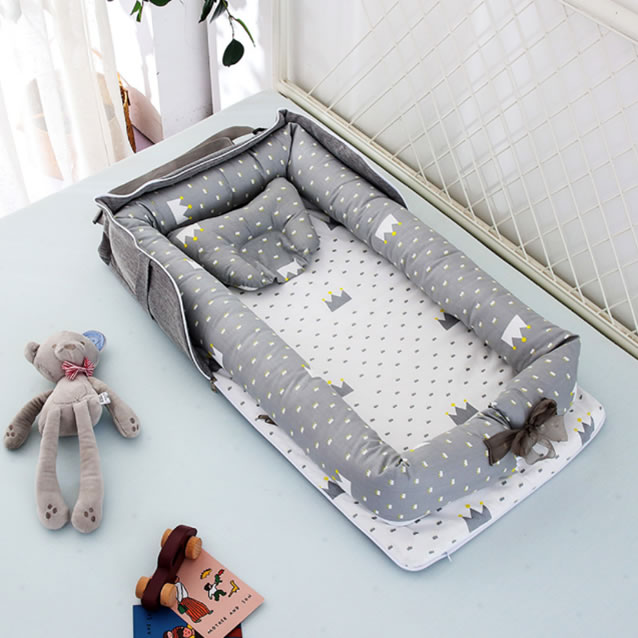
    WASHINGTON, D.C. – The U.S. Consumer Product Safety Commission (CPSC) is warning consumers to immediately stop using Gorsetle baby loungers because they do not comply with the federal safety standard for infant sleep products, posing a risk of suffocation and fall hazard to infants.

    The loungers fail to meet the safety requirements of CPSC’s Infant Sleep Products Rule because they do not have a stand. In addition, the loungers fail to meet the markings, labeling, and instructional literature requirements. These failures create an unsafe sleeping environment for infants. The lounger and its packaging also lack a tracking label containing required information, including the date of manufacture.

    The seller, Gorsetle US, is not cooperating with CPSC on a recall of this product and is not offering a remedy to consumers.

    The infant loungers were advertised as GORSETLE Baby Loungers, Portable Infant Floor Seat Ultra Soft & Breathable Newborn Lounger Baby Registry Essential Gift Great for Travel and Tummy Time (Crown). The loungers include a head pillow and fold into a portable handbag with a handle. The loungers were sold in three different printed fabrics including Crown, Jungle Animal, and Little Elephant. The loungers were sold online at www.amazon.com for about $60. There is no labeling on the infant loungers. 

    Although the Infant Sleep Products Rule applies specifically to products manufactured after June 23, 2022, these loungers do not have a required date of manufacture labeled on the product or packaging and therefore, the CPSC urges consumers to immediately stop using the loungers, cut the fabric, and dispose of the fabric and the pillow immediately. CPSC urges all firms to stop sale of non-compliant infant sleep products regardless of the date of manufacture. Report any incidents involving product injuries or defects to CPSC at www.SaferProducts.gov.

    Parents and caregivers are reminded:

    • The best place for an infant to sleep is on a firm, flat surface in a crib, bassinet or play yard.
    • Use a fitted sheet only and never add blankets, pillows, padded crib bumpers, or other items to an infant’s sleeping environment.
    • Infants should always be placed to sleep on their back. Infants who fall asleep in an inclined or upright position should be moved to a safe sleep environment with a firm, flat surface such as a crib, bassinet or play yard.

    Individual Commissioners may have statements related to this topic. Please visit www.cpsc.gov/commissioners to search for statements related to this or other topics.

    Gorsetle US Infant Loungers
    Gorsetle US Infant Loungers
  • Check of baby food for heavy metals requires paying attention, but not panic

    From Food Safety News – by Dan Flynn on June 28, 2023

    Consumer Reports (CR) is out with a new study of heavy metals in baby food. CR’s latest tests included 14 products, representing a mix of fruits and vegetables; meals and entrees; and snacks, such as bars, puffs, and teething wafers. At least three samples of each product were tested and the 14 products likely to be high in a combination of arsenic, cadmium, and lead based on their ingredients or on previous CR tests.

    CR focused on products that had concerning levels in tests five years ago. Seven of the products were ones tested in 2018; the other seven were similar to products that were previously tested but that are no longer on the market. More about how CR tests baby foods for heavy metals is available here.

    To determine how many servings of each product a child could eat per day, CR’s food safety experts considered how much of that type of food kids typically eat, using data from the Centers for Disease Control and Prevention’s National Health and Nutrition Examination Survey.

    Then CR assessed the risks posed by the combined exposure to arsenic, cadmium, and lead in that food. This link  CR.org shows CR’s recommendations for the products tested. The findings were a spot check of the market and should not be used to draw definitive conclusions about specific brands, according to CR.

    The CR findings consider that parents feed their children many foods a day. “Because heavy metals are so pervasive in foods — and because they tend to accumulate in the body — small exposures from multiple foods can add up,” says Eric Boring, PhD, a CR chemist who oversaw our testing. “And feeding your child amounts close to the daily serving limits leaves little room for exposure to heavy metals from other foods.”

    Long-term intake of heavy metals may increase the risk of a variety of health and developmental problems in young children, including a lower IQ and behavioral issues, as well as ADHD, autism, and other issues.

    “Early development is a really sensitive period of time,” says Maya Deyssenroth, PhD, an assistant professor of environmental health sciences at Columbia University’s Mailman School of Public Health. “Organ systems are developing and are particularly vulnerable.”

    At the same time, Boring says, “While concerning, these results are no reason to panic.” He points out that the risk comes from repeated exposure over long periods of time, not from eating a food just once or even several times. An occasional serving of even one of the foods with the highest levels is generally OK,” he says. “Just remember to mix up what your kids eat.”

  • CPSC Warns Consumers to Immediately Stop Using CCATTO Baby Tents Due to Suffocation Risk and Fall Hazard; Failure to Meet Infant Sleep Product Safety Requirements

    WASHINGTON, D.C. – The U.S. Consumer Product Safety Commission (CPSC) is warning consumers to immediately stop using CCATTO brand baby tents because they do not comply with mandatory federal safety standards for infant sleep products and because they contain a banned infant pillow, posing a fall hazard and risk of suffocation to infants.

    The baby tents fail to meet the safety requirements of CPSC’s Infant Sleep Products Rule, creating an unsafe sleeping environment for infants. The failures include: the tents are not supported by free standing legs and do not meet the markings and labeling and instructional literature requirements. In addition, the tents contain a banned infant pillow. The pillow is loosely filled with a granular material, including but not limited to, polystyrene beads or pellets and is intended or marketed for use by children under one year of age. The tent and its packaging also lack a tracking label containing certain required information, including the date of manufacture.

    The seller, LA.INNO Direct, of China, has not responded to CPSC’s request for a recall.

    The baby tents were advertised as a Portable Baby Tent, CCATTO Pop Up Beach Tent for Baby, Enhanced Ventilation, UPF 50+ Sun Shelter for Infant, Baby Camping Bed with Mosquito Net (Pegs, Travel Bag, Bonus Cooling Sleeping Kit Included). The baby tents have “CCATTO” branded on the top and are gray with neon green trim. The baby tents were sold online at www.amazon.com and other websites for about $30 in recent years. There is no labeling on the baby tents. 

    Although the Infant Sleep Products rule applies to products manufactured after June 23, 2022, CPSC urges firms to consider stopping sale of non-compliant infant sleep products regardless of the date of manufacture. These tents do not have a required date of manufacture labeled on the product or packaging. CPSC urges consumers to stop using the tents, cut the fabric, and dispose of the fabric and the pillow immediately. Report any incidents involving product injuries or defects to CPSC at www.SaferProducts.gov.

    Parent and caregivers are reminded:

    • The best place for an infant to sleep is on a firm, flat surface in a crib, bassinet or play yard.
    • Use a fitted sheet only and never add blankets, pillows, padded crib bumpers, or other items to an infant’s sleeping environment.
    • Infants should always be placed to sleep on their back. Infants who fall asleep in an inclined or upright position should be moved to a safe sleep environment with a firm, flat surface such as a crib, bassinet or play yard.

    Individual Commissioners may have statements related to this topic.  Please visit www.cpsc.gov/commissioners to search for statements related to this or other topics.

    Ccatto Baby Tent
    Ccatto Baby Tent