Category: Public Service Announcement

  • CPSC Approves New Federal Safety Standard for Water Beads to Reduce the Risk of Injury and Death to Young Children

    Release Date: August 21, 2025

    Release Number: 25-443

    WASHINGTON, D.C. – The U.S. Consumer Product Safety Commission (CPSC) has approved a consumer product safety standard for water bead toys, reflecting the agency’s ongoing commitment to protecting vulnerable consumers and preventing avoidable tragedies in American homes.  The new rule is aimed at reducing the risk of injury or death associated with children ingesting, inserting into their ear or nose, or aspirating or choking on water bead toys. The vote was 2 to 0.

    A water bead is defined as a “various shaped liquid absorbent polymer, composed of materials such as, but not limited to, polyacrylamide and polyacrylate, which expands when soaked in liquid.”

    The new rule:

    • Sets a maximum expansion size limit for water bead toys to prevent them from becoming large enough to cause blockages if ingested, and other injuries if inserted into an ear or nose; or aspirated.
    • Establishes limits on the amount of allowable acrylamide to reduce toxicity risks.
    • Requires strongly worded, easily seen warning labels to caution consumers.

    “China has flooded our market with hazardous water bead toys that have already cost lives,” said CPSC Acting Chairman Peter A. Feldman. “CPSC will intervene when the evidence is clear, and the danger is real.  This standard will make a meaningful difference in protecting young children.”

    From 2017 to 2022, an estimated 6,300 water bead-related ingestion injuries were treated in U.S. emergency departments. There was at least one reported death of a 10-month-old girl in 2023 due to water bead ingestion.

    The new standard reflects CPSC’s ongoing commitment to protecting vulnerable consumers and preventing avoidable tragedies in American homes.  The rule takes effect 90 days after publication in the Federal Register.

    CPSC Recommended Safety Tips:

    • Remove water beads from any environment where young children may be present.
    • Store water beads in a secure container and location where young children cannot easily access them.
    • Do not allow children to play with water beads unsupervised.
    • If toy contains water beads such as a ball filled with water beads, discard the product if beads start to come out.
    • Water beads can easily scatter, roll, and become lost. After use, clean the area and remove any beads that may have rolled away.
    • Remember, some water bead products are not marketed as children’s toys and fall outside the scope of this rule. Keep these products out of spaces where children live or play.

    Additional Resources: 

    Water Beads – Education Center

    Water Beads – Safety Alert

    Poison Prevention – Education Center

    Toy Safety Business Guidance | CPSC.gov

  • DANGEROUS HEAT WARNING

    A SAFETY NOTE TO ALL IN THE SHENANDOAH VALLEY EAST and WEST OF THE BLUE RIDGE IN VIRGINIA:

    The current near 100-degree Fahrenheit heat is excessive and can be dangerous for humans and pets, especially for those who are elderly or infirm, and it will be with us at least through the coming weekend. 

    Please, Everyone, be safe! Stay indoors in AC when you can, and as often as possible, do sunscreen, wear protective clothing and a hat if you must go out. Go out early in the a.m. or after the sun is down! 

    Bring your usually-outdoor pets inside if you can, and let them rest with hydration/food in a cool garage or basement. They will be indebted to you! 

    Remember that cars with windows rolled up are like greenhouses and heat up enough in 6 minutes to enable you to fry an egg on your dashboard! This is not a joke! If you travel with any children, grandchildren, family members or the elderly, do NOT under any circumstances leave them in a parked car in the heat even if the AC is running (Occasionally car engines can cut off without warning). This message is a public service from BeChildSafe.org

  • National Heatstroke Prevention Day is May 1

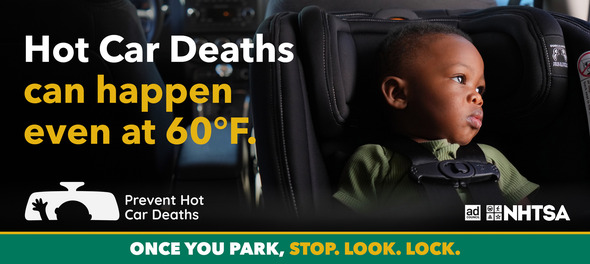
    Heatstroke is one of the leading causes of non-crash, vehicle-related deaths for children. Sadly, 1,010 children have died from heatstroke in a hot car since 1998.

    Nearly every state in the United States has been affected by a pediatric vehicular heatstroke death. This tragedy is 100% preventable. While summertime is the peak season, heatstroke can occur in outdoor temperatures as low as 60 degrees.

    Facts:

    • Hot car deaths are the leading cause of non-crash, vehicle-related deaths for children 14 and younger.
    • High body temperature can cause permanent injury or even death:
    • More than 1,000 children have died due to pediatric vehicular heatstroke since 1998.
    • 39 children died in 2024 because of vehicular heatstroke.
    • On average, 37 children die per year due to vehicular heatstroke.
    • In 2018 and 2019, we saw a record number of hot car deaths – 53 children died each year.
    • The three main scenarios in which heatstroke occurs are:
      • Children are forgotten in vehicles by parents or caregivers.Children gain access to unlocked vehicles and become trapped inside.
    • Heatstroke begins when the core body temperature reaches approximately 104 degrees and the thermoregulatory system is overwhelmed. A core temperature of approximately 107 degrees is lethal.
    • Children are more sensitive to heat than adults.
    • Children are at a higher risk than adults of dying from heatstroke in a hot vehicle because their body temperature rises three to five times faster than an adult’s.
    • The children most at-risk for heatstroke are those under 1 year, yet they make up one-third of hot car deaths.
    • In 10 minutes, a car can heat up by as much as 20 degrees. Rolling down a window does little to keep a vehicle cool, even on a cooler day.
    • Heatstroke fatalities have occurred even in vehicles parked in shaded areas and when the outside air temperatures were 80 degrees Fahrenheit or less.
    • Summertime is the peak season for these tragic incidents, with children dying at an average rate of two per week. Unfortunately, hot car deaths can even occur in outdoor temperatures as low as 57 degrees. The warning signs of heatstroke vary, but may include:
      • Red, hot, and moist or dry skin
      • Absent sweating, even though the child is warm
      • Strong rapid pulse or a slow weak pulse
      • Throbbing headache
      • Dizziness
      • Nausea
      • Confusion
    • Grouchiness or strange behavior

    How Does This Happen?

    • This “forgotten” circumstance accounts for more than half of the total child hot car deaths that have occurred since 1998. In approximately half of these “forgotten” deaths, specifically, the child was on their way to childcare or preschool. A busy parent or caregiver may unintentionally forget that a quiet or sleeping child is in the back of the vehicle. This most often occurs with children under one year of age. Always remember: Once You Park, Stop, Look, Lock. These actions could save a life.
    • Toddlers and young children are also at risk, as they can climb into a vehicle without supervision. Children may be playing or hiding, but if they enter a vehicle without the knowledge of an adult, they may be unable to get out of the car, especially if child locks are activated. It is essential to teach children that cars are not a place to play. Parents and caregivers should get into the habit of storing keys and fobs out of a child’s reach.
    • Sometimes, children are left intentionally by parents or caregivers who do not understand the dangers of a hot vehicle and may have a quick errand to run, or who may not understand how quickly a vehicle can heat up to deadly temperatures. It cannot be overstated: Never leave a child in a vehicle alone, not even for a minute.
    • The day of the week may have an influence on children who have been forgotten in a vehicle, or who have gained access: “Forgotten” deaths are most likely to occur on Thursdays and Fridays, while deaths in which a child has unknowingly climbed into a vehicle typically occur on weekends, with Sunday being the most at-risk day.

    Tips:

    • NEVER leave a child in a vehicle unattended, not even for a minute.
    • Make it a habit to check your entire vehicle, especially the back seat, EVERY time you exit the car.
    • Always lock your car when you aren’t using it, and put the keys out of reach. Even if you don’t have a child of your own, a child in your neighborhood could get into your unlocked vehicle.
    • Keep an item in the back seat, like a toy. Put the toy up front with you when your child is in the car seat to serve as a reminder. Or, put your purse or work bag in the back seat with the child.  
    • If you see a child in distress in a vehicle, act. Call 911 immediately and get help.

    For more information, visit www.trafficsafetymarketing.gov/safety-topics/child-safety/vehicular-heatstroke-prevention.

  • CPSC Warns Consumers to Immediately Secure TIANQIU Alkaline Button Cell Battery Packs Due to Battery Ingestion Hazard; Violation of Federal Law Requiring Child-Resistant Packaging; Sold Exclusively at East Sun Wholesale

    Release Date: January 2, 2025

    Release Number: 25-084

    WASHINGTON, D.C. – The U.S. Consumer Product Safety Commission (CPSC) is warning consumers to immediately move TIANQIU AG4 and AG6 alkaline button cell batteries to a secure storage location away from children because the packaging is not child-resistant as required by Reese’s Law. Reese’s Law and CPSC regulations that implement it establish performance and warning label requirements for consumer products with button cell or coin batteries to protect children from life threatening ingestion. If a child swallows a button cell or coin battery, it can cause serious injuries, internal chemical burns or death.

    The CPSC issued a Notice of Violation to the importer, East Sun Wholesale Inc., of Hialeah, Florida. East Sun Wholesale has not agreed to recall these battery packs or offer a remedy to consumers.

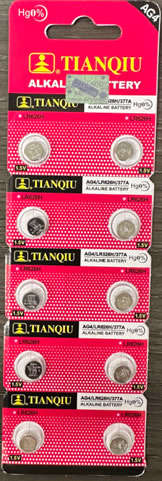
    About 12,000 battery packs were imported from May 2023 through August 2024 and sold by East Sun Wholesale. The battery packs were sold in a package of 10 batteries. The package bears the brand TIANQIU followed by the battery type, AG4 or AG6, in the top right-hand corner.

    Because the battery packaging is not child resistant, CPSC urges consumers to immediately  secure the TIANQIU Alkaline Battery in a secure location away from children. Button cell and coin batteries are hazardous. Always follow local hazardous waste procedures when disposing of or recycling button cell or coin batteries. Do not sell or give away these hazardous battery packs.

    TIANQIU Battery Package

    Report any incidents involving injury or product defect to CPSC at www.SaferProducts.gov.

    Individual Commissioners may have statements related to this topic.  Please visit www.cpsc.gov/commissioners to search for statements related to this or other topics.
  • CPSC Warns Consumers to Immediately Stop Using Rehoopex 6-Drawer Dressers Due to Tip-Over and Entrapment Hazards; Violations of the Federal Regulations for Clothing Storage Units

    Release Date: December 26, 2024

    Release Number: 25-076

    WASHINGTON, DC – The U.S. Consumer Product Safety Commission (CPSC) is warning consumers to immediately stop using unsecured Rehoopex 6-Drawer Dressers because they are unstable if they are not anchored to the wall, posing serious tip-over and entrapment hazards that can result in injuries or death to children. The dressers violate the performance and labeling requirements of the STURDY Act and CPSC’s implementing regulations, which establish a mandatory safety standard to prevent injury or death caused by clothing or storage units tipping over users, including children.

    The CPSC issued a Notice of Violation to the seller Well King International Trading Limited, of China, doing business as REHOOPEX, but the firm has not agreed to recall these clothing storage units or offer a remedy to consumers.

    About 2,500 dressers were sold online at Amazon.com from September 2023 through August and 2024 and the price ranges from $115 to $170 each. The 6-Drawer Dresser was sold in colors white, wood and white/wood combination. The dresser is about 16 inches long by 47 inches wide by 31 inches tall and weighs approximately 84 pounds.

    CPSC urges consumers to dispose of or anchor the Rehoopex 6-Drawer Dresser to a wall. Do not sell or give away these hazardous clothing storage units.

    Rehoopex 6-Drawer Dresser
    Rehoopex 6-Drawer Dresser

    Report any incidents involving injury or product defect to CPSC at www.SaferProducts.gov.

    Individual Commissioners may have statements related to this topic.  Please visit www.cpsc.gov/commissioners to search for statements related to this or other topics.
  • CPSC Urges Consumers to Stop Using FLIKRFIRE Tabletop Fireplaces Due to Flame Jetting and Fire Hazards; Two Deaths and Serious Burn Injuries Reported

    CPSC has issued This Product Safety Warning:

    Name of Product: FLIKRFIRE Tabletop Fireplaces

    Hazard: Using alcohol-fueled FLIKRFIRE Tabletop Fireplaces can cause uncontrollable pool fires in which flames burn across the surface of pooled or spilled alcohol, as well as flame jetting from fuel containers, resulting in serious or fatal burns.

    Consumer Action: Consumers should immediately stop using and dispose of these dangerous products.

    Product Safety Warning Date: December 19, 2024

    Product Safety Warning Details

    Description:

    Washington, D.C. — The U.S. Consumer Product Safety Commission (CPSC) is warning consumers that using alcohol-fueled FLIKRFIRE Tabletop Fireplaces can cause uncontrollable pool fires in which flames burn across the surface of pooled or spilled alcohol, as well as flame jetting from fuel containers, resulting in serious or fatal burns. Consumers should immediately stop using and dispose of these dangerous products.

    Flame jetting contributed to the June 2024 death of an elderly couple who were seriously burned when a third person attempted to refill a FLIKRFIRE that appeared to be extinguished. In at least three other incidents, FLIKRFIRE use has resulted in third or fourth degree burns to extensive areas of consumers’ bodies.

    FLIKRFIRE Tabletop Fireplaces are small, decorative bowls or open containers that require consumers to pour isopropyl (rubbing) alcohol into the bowl and then ignite the pooled alcohol in the same location it was poured. Requiring consumers to take these two steps to use the product violates voluntary safety standard ASTM F3363-19, which is designed to prevent pool fires and flame jetting in fire pit products that burn liquids.

    Isopropyl alcohol burns with flame temperatures over 1,600°F and can cause third degree burns in less than one second. Igniting pooled alcohol in the FLIKRFIRE bowl creates an uncontrollable pool fire, which can suddenly produce larger, hotter flames that can spread beyond the product. 

    Flame jetting, a second hazard, can occur when refilling a FLIKRFIRE if any flame is present. A flame in a FLIKRFIRE can be hard to see and can ignite alcohol as it is poured and cause an explosion that propels flames and burning liquid onto the consumer or bystanders.

    FLIKR LLC, the manufacturer of FLIKRFIRE Tabletop Fireplaces, is no longer in business and has not agreed to provide a recall remedy for consumers. Seera Creative LLC, the prior manufacturer of the FLIKRFIRE fireplaces, is also no longer in business. 

    FLIKRFIRE Tabletop Fireplaces were sold online, including at Amazon.com, BespokePost.com, Faire.com, Shopify.com, Hirschpromo.com, Wix.com, Huckberry.com, TouchofModern.com, Macys.com, Nordstroms.com, CB2.com, and NeimanMarcus.com for between $35 and $105 from 2018 through 2024.

    Incidents/Injuries: Flame jetting contributed to the June 2024 death of an elderly couple who were seriously burned when a third person attempted to refill a FLIKRFIRE that appeared to be extinguished. In at least three other incidents, FLIKRFIRE use has resulted in third or fourth degree burns to extensive areas of consumers’ bodies.

    Sold At: FLIKRFIRE Tabletop Fireplaces were sold online, including at Amazon.com, BespokePost.com, Faire.com, Shopify.com, Hirschpromo.com, Wix.com, Huckberry.com, TouchofModern.com, Macys.com, Nordstroms.com, CB2.com, and NeimanMarcus.com for between $35 and $105 from 2018 through 2024.

    Pictures available here: https://www.cpsc.gov/Warnings/2025/CPSC-Urges-Consumers-to-Stop-Using-FLIKRFIRE-Tabletop-Fireplaces-Due-to-Flame-Jetting-and-Fire-Hazards-Two-Deaths-and-Serious-Burn-Injuries-Reported

    Product Safety Warning Number: 25-073

    Report any incidents involving injury or product defect to CPSC at www.SaferProducts.gov.

    Individual Commissioners may have statements related to this topic.  Please visit www.cpsc.gov/commissioners to search for statements related to this or other topics.

  • CPSC Warns Consumers to Immediately Stop Using NLFGUW Electric Gel Ball Blaster Toy Guns Due to Eye Injury Hazard; Violation of the Federal Regulations for Projectile Toys; Sold by US TK on Amazon.com

    Release Date: December 12, 2024

    Release Number: 25-062

    WASHINGTON, D.C. – The U.S. Consumer Product Safety Commission (CPSC) is warning consumers to immediately stop using NLFGUW electric gel ball blaster toy guns. The toy guns fail to comply with federal safety regulations for projectile toys, so that the projectile’s impact can injure a child’s eye.

    The CPSC issued a Notice of Violation to the seller, US TK, of China, but the firm has not been responsive to CPSC’s request for a recall of this product.

    The toy guns were sold in pink camo and came with goggles, a USB charger, gel beads, a gel bead hopper, a connector, a gun head, a rechargeable battery, a USB cable and a target. “NLFGUW M416 ASSAULT RIFLE” and “GEL BALL BLASTER” are printed on the package. The toy guns were sold online at www.amazon.com from April 2023 through September 2024 for about $29.

    CPSC urges consumers to stop using the toy guns immediately and dispose of them in accordance with local disposal requirements. Do not sell or give away these hazardous toy guns.

    Pictures available here: https://www.cpsc.gov/Warnings/2025/CPSC-Warns-Consumers-to-Immediately-Stop-Using-NLFGUW-Electric-Gel-Ball-Blaster-Toy-Guns-Due-to-Eye-Injury-Hazard-Violation-of-the-Federal-Regulations-for-Projectile-Toys-Sold-by-US-TK-on-Amazon-com

    Report any incidents involving injury or product defect to CPSC at www.SaferProducts.gov.

    Individual Commissioners may have statements related to this topic.  Please visit www.cpsc.gov/commissioners to search for statements related to this or other topics.
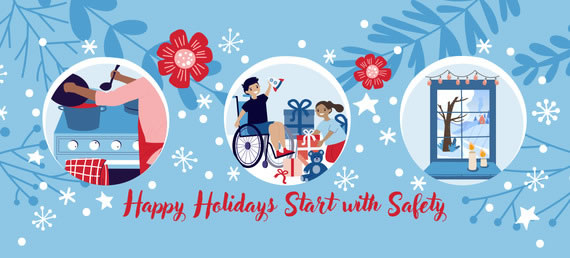
  • Happy Holidays Start with Safety: CPSC Urges Families to Cook, Decorate and Select Toys with Care This Season

    Release Date: November 19, 2024

    Release Number: 25-049

    Holiday Safety

    CPSC Releases New Data on Toy-Related Injuries and Deaths

    WASHINGTON, D.C. –  As the holiday season approaches, the U.S. Consumer Product Safety Commission (CPSC) urges consumers to put safety at the top of the list while cooking, decorating and toy buying. In addition, CPSC reminds families to take precautions whether shopping online or in-person, to keep family and friends safe from common holiday-related hazards. CPSC’s latest Toy-Related Deaths and Injuries report, reveals that in 2023 an estimated 154,700 children 12 years or younger were treated in emergency rooms due to toy-related injuries, and 10 children died in toy-related incidents.

    Other key findings from the report include:

    Toy-related ER treated injuries from 2016 to 2023:

    • Decreased by nearly 5% for children under 15 from 175,600 to 167,500
    • Decreased by nearly 8% for children under 13 from 167,800 to 154,700

    Non-motorized scooters 

    • Accounted for the largest share of injuries in 2023 (53,000) across all age groups
    • Are involved in more than one in every five toy-related injuries for children under 15

    The majority of toy-related deaths were related to:

    • Choking on small balls or crayons
    • Drownings linked to flotation toys
    • Entrapment inside a toy chest
    • Ingestion of water beads

    Injury diagnoses

    • Lacerations were the most common toy-related injury for all ages
    • Contusions/abrasions and fractures were the second and third most common for all ages
    • Contusions/abrasions and internal injuries were the second and third most common diagnoses for children under 15 years old
    • Ingestion and internal injuries were the second and third most common diagnoses for children under 5 years old

    “From online shopping to in-person gatherings, safety and protecting our children should be a top priority this holiday season,” said CPSC Chair Alex Hoehn-Saric. “By being mindful of product hazards, checking for recalls and purchasing from reputable sources, you can protect your loved ones and ensure a joyous and accident-free holiday for all.” 

    CPSC is highlighting the following additional safety tips for safe and happy holiday activities including toy-buying, cooking and decorating. 

    Toys

    CPSC, in collaboration with U.S. Customs and Border Protection (CBP), seized nearly 1.6 million dangerous or illegal toys in fiscal year 2024. Of those, nearly 101,900 toy seizures were related to lead content.

    Wrap your holiday with a protective bow with these giving gift safety tips:

    • Follow age guidance and other safety information on toy packaging and choose toys that match each child’s interests and abilities.
    • Get safety gear, including helmets, for scooters and other riding toys–and make sure that children use them every time. 
    • Keep small balls and toys with small parts away from children younger than age 3 and keep deflated balloons away from children younger than age 8. 
    • Once the gifts are open, immediately discard plastic wrappings or other packaging on toys before they become dangerous playthings.

    Cooking

    The largest share of the 352,400 annual residential fires are cooking related (45%), according to CPSC’s report on Residential Fire and Loss Estimates. Cooking fires spike on Thanksgiving Day with an average of 1,400 cooking fires – more than three times the daily average of cooking fires. CPSC data also shows that Black Americans have the highest rate of deaths from fire, nearly twice the overall rate across the population.

    Prep holiday cooking with these tips for a safe and fire-free holiday season:

    • Never leave cooking food unattended on the stove or in the oven.
    • Only fry a turkey outside and away from your home or other flammable materials. Never use turkey fryers in an enclosed area like the garage or on the porch.

    Holiday Decorations

    There are about 160 Christmas decorating-related injuries each day during the holiday season, with nearly half of the injuries involving falls. In the 2023 holiday season (Nov. 1, 2022 – Jan. 31, 2023), about 14,900 people were treated in emergency rooms due to holiday decorating-related injuries.

    Keep holiday decorating safe, festive, and bright with these helpful tips:

    • Water your live Christmas tree and look for the “Fire Resistant” label when buying an artificial tree.
    • Never leave candles unattended. Keep burning candles in sight, away from flammable items and put them out before leaving the room. Use flameless candles whenever possible.
    • Never string together more than three sets of incandescent lights and never overload electrical outlets.

    Online Toy Shopping

    • Know your seller. Purchase toys from stores and online retailers you know and trust.
    • When purchasing toys and games online that contain small parts, balls, marbles and balloons, look for a choking hazard warning statement on the firm’s advertising page about these products.    

    Visit CPSC’s Holiday Safety Information Center for more holiday safety tips, as well as a sharable Holiday Safety videoposter and b-roll that show the serious risks posed by using a turkey fryer too close to the home, a dry Christmas tree, and burning candles near flammable items.

    Pictures available here:

    Report any incidents involving injury or product defect to CPSC at www.SaferProducts.gov.

    Individual Commissioners may have statements related to this topic.  Please visit www.cpsc.gov/commissioners to search for statements related to this or other topics.

  • CPSC Warns Consumers to Immediately Stop Using Chad & Jake Children’s Robes Due to Burn Hazard; Violations of Federal Flammability Regulations for Children’s Sleepwear

    Release Date: October 24, 2024

    Release Number: 25-017

    WASHINGTON, D.C. – The U.S. Consumer Product Safety Commission (CPSC) is warning consumers to immediately stop using Chad & Jake children’s robes because they can catch fire, posing a risk of burn injuries to children. The children’s robes fail to comply with federal safety regulations for children’s sleepwear.

    Children’s sleepwear that is not flame-resistant and cannot self-extinguish poses a burn risk to children if they come into contact with flames from sources such as matches, lighters, candles, ranges, stoves, space heaters, fireplaces, etc.

    The CPSC sent a Notice of Violation to the retailer, Black Olive Partners LLC, of Boca Raton, Florida, doing business as Designs by Chad & Jake. Chad & Jake has not agreed to recall these children’s robes or offer a remedy to consumers.

    The children’s robes were sold online on various websites including chadandjake.comamazon.comfanatics.commilehighsportsfan.comlids.commlsstore.comfanoutfitters.compelesoccer.comsecstore.comcelticsstore.comkitbag-us.comstore.nascar.comstore.nba.comshop.nhl.comclemson.spirit.bncollege.comshop.warriors.combu.shoptruespirit.com and shop.theamerican.org for about $50. The children’s robes were imported from January 2011 through June 2024.

    CPSC tested the children’s robes in size 1/2, with White with Purple Trim.  CPSC is aware that the firm also sold additional colors/styles: White with Black Trim, White with Pink Gingham Trim, White with Red Trim, White with Hunter Green Trim, White with Blue Gingham Trim, White with Royal Blue Trim, White with Navy Trim, Black with Black Trim, Red with Red Trim, Royal Blue with Royal Blue Trim, and Navy Blue with Navy Blue Trim.

    The 100% cotton, terry cloth children’s robes are long-sleeved, hooded robes with a belt attached. The hood, wrists, belt, down the front center and hem of the robe have colored trim. Some robes have monograms embroidered on the upper right-hand corner of the robe with a child’s name and/or logo/emoji. “Designs by Chad & Jake” and www.CHADandJAKE.com are printed on the front of the neck label. “MADE IN CHINA”, “RN 165297”, batch number and washing instructions are printed on the back of the neck label.

    CPSC urges consumers to stop using the children’s robes immediately and dispose of them. Do not sell or give away these hazardous children’s robes.

    Report any incidents involving injury or product defect to CPSC at www.SaferProducts.gov.

    Individual Commissioners may have statements related to this topic.  Please visit www.cpsc.gov/commissioners to search for statements related to this or other topics.

  • CPSC Warns Consumers to Immediately Stop Using Kindly Toys Busy Board Toys Due to Choking Hazard; Violation of the Federal Regulation for Toys with Small Parts

    Release Date: October 17, 2024

    Release Number:

    WASHINGTON, D.C. – The U.S. Consumer Product Safety Commission (CPSC) is warning consumers to immediately stop using and dispose of Kindly Toys Customized Busy Board Toys because the toys have small parts that can break off, posing a choking hazard to young children. 

    CPSC issued a Notice of Violation to the seller, Kindly Toys, of Vietnam, but the firm has not been responsive to CPSC’s request for a recall of this product.

    The wooden board toy includes letters, shapes, a clock, a car and a plane that detach from the board. There are additional pieces with interactive movement that do not detach from the board. The hands of the clock, beads, and propeller of the plane components of the product can break, creating small parts that pose a choking hazard. There are no markings on the product. The letters are customizable at the time of order to spell any name.

    The Customized Busy Board Toys are being sold online at kindlytoys.com and Amazon.com for about $50.

    CPSC urges consumers to stop using the toys immediately and dispose of them. Do not sell or give away these hazardous toys. 

    Pictures available here: https://www.cpsc.gov/Newsroom/News-Releases/2025/CPSC-Warns-Consumers-to-Immediately-Stop-Using-Kindly-Toys-Busy-Board-Toys-Due-to-Choking-Hazard-Violation-of-the-Federal-Regulation-for-Toys-with-Small-Parts

    Report any incidents involving injury or product defect to CPSC at www.SaferProducts.gov.

    Individual Commissioners may have statements related to this topic.  Please visit www.cpsc.gov/commissioners to search for statements related to this or other topics.