Category: Public Service Announcement

  • CPSC Warns Consumers to Immediately Stop Using Miracle Baby Loungers Due to Suffocation Risk and Fall Hazard; Failure to Meet Federal Safety Regulation for Infant Sleep Products; Sold Exclusively on Amazon.com

    CPSC Release Number: 24-029 – November 22, 2023

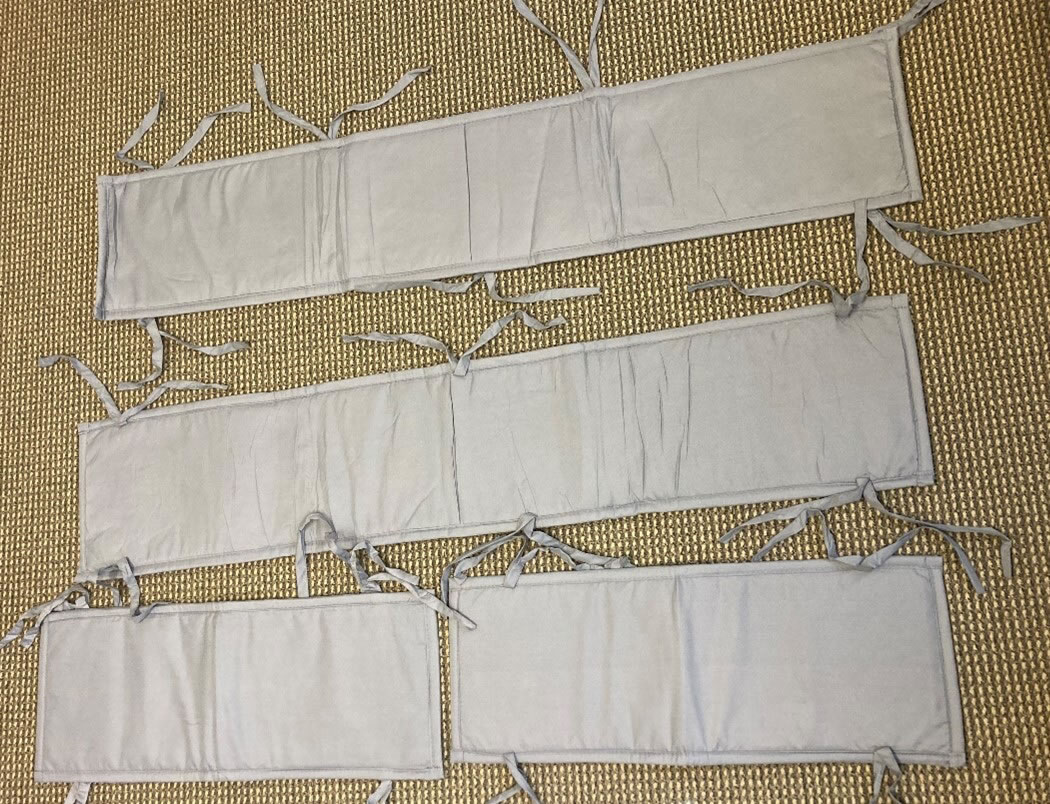
    WASHINGTON, DC – The U.S. Consumer Product Safety Commission (CPSC) is warning consumers to immediately stop using Miracle Baby Loungers because they violate the federal safety regulation for infant sleep products, posing a risk of suffocation and a fall hazard to infants. Specifically, the loungers fail to meet the safety requirements of CPSC’s Infant Sleep Products regulation because they do not have a stand, which creates an unsafe sleeping environment for infants. In addition, the loungers fail to meet the regulation’s marking, labeling, and instructional literature requirements. The lounger and its packaging also lack a tracking label containing certain required information, including the date of manufacture, required for children’s products including durable infant or toddler products.

    CPSC issued a Notice of Violation to the seller, Yichang Lanqier Garment Co. Ltd., of China, doing business as Miracle Baby, but the firm has not agreed to recall these loungers or offer a remedy to consumers. Consumers who purchased the product will receive this notice directly.

    The loungers were sold online at Amazon.com from June 2022 through November 2022 for between $30 and $50. CPSC evaluated the loungers in the New Bear printed fabric and is aware the firm also sold additional printed fabric options: Bee, Blue Star, Cat, Deer, Elephant, New Blue Star, New Panda, New Pink Star, Pink Cross, Sea, Whale and White Cross. “Miracle Baby” is printed on a tag sewn onto the exterior of the loungers.

    Although the Infant Sleep Products regulation is applicable to products manufactured on or after June 23, 2022, these loungers do not have a required date of manufacture labeled on the product or packaging, and therefore, the CPSC urges consumers to stop using all Miracle Baby loungers. Further, CPSC continues to advise firms to stop sale of non-compliant infant sleep products regardless of the date of manufacture.

    CPSC urges consumers to stop using the Miracle Baby loungers immediately. Unzip and disassemble the product by cutting up the lounger cover, sleeping pad, and side bumpers. Dispose of the pieces in the trash or textile recycling, in accordance with local garbage collection policies.Parents and caregivers are reminded:The best place for an infant to sleep is on a firm, flat surface in a crib, bassinet or play yard.Use a fitted sheet only and never add blankets, pillows, padded crib bumpers, or other items to an infant’s sleeping environment.Infants should always be placed to sleep on their back. Infants who fall asleep in an inclined or upright position should be moved to a safe sleep environment with a firm, flat surface such as a crib, bassinet or play yard.Report any incidents involving injury or product defect to CPSC at www.SaferProducts.gov.Individual Commissioners may have statements related to this topic.  Please visit www.cpsc.gov/commissioners to search for statements related to this or other topics.
  • Make it a ‘Home Safe Home’ for the Holidays

    CPSC Release Number 24-025, November 14, 2023

    CPSC reports latest injuries from toy hazards; Provides tips to stay safe for the holidays

    WASHINGTON, D.C. – A new report from the U.S. Consumer Product Safety Commission (CPSC) is highlighting the importance of safety when buying and playing with kids’ toys – even for older children. CPSC’s Toy-Related Deaths and Injuries report found there were 11 deaths, and an estimated 145,500 emergency department-treated (ED) injuries in 2022 associated with toys for children 12 years and younger.  

    The majority of the 11 deaths reported were attributed to choking or asphyxiation associated with small parts, balls, or balloons. Among the ED-treated injuries, non-motorized scooters accounted for the largest share of injuries across all age groups – 35,400. Non-motorized scooters accounted for one in every 5 toy-related injuries to children aged 14 and younger.

    While the report showed year-over-year shifts in injuries and deaths, CPSC researchers observed a statistically significant downward trend from 2015 to 2022 in toy-related injuries for children 14 years and younger. There was a nearly 12% decrease in the estimate of toy-related ED treated injuries from 2015 (181,600) to 2022 (159,500) for children 14 years and younger whereas children under the age of 13 saw a 16% decrease (173,200 to 145,500).

    Consumers should not only “think safety” about what they buy for children but should also be vigilant about where gifts are purchased, especially online. As e-commerce retailing continues to grow year-over-year for holiday sales, Chair Hoehn-Saric is urging caution when turning to online retail outlets.  

    “Consumers expect the products they purchase online to be as safe as those they buy in brick-and-mortar stores,” Chair Hoehn-Saric said. “While this is true when buying online directly from a manufacturer, purchasing from an online marketplace that services other sellers raises additional risks. Consumers need to educate themselves not only about what they buy, but where and from whom. It’s important not to sacrifice safety.”  

    CPSC recommends following these tips when purchasing products online:

    • Remember that when buying gifts online you could be purchasing directly from a manufacturer, or going through a retailer, or a third-party seller. In each instance, if you have a problem with a product or want to return or exchange it where you purchased the product matters. Look for the “sold by” information when purchasing from an online marketplace.
    • Do more than skim product descriptions. Always read to the bottom of the listing or check drop-down menus for additional safety information, especially when shopping for children.  Also, read customer reviews to see what other consumers have experienced with the product. 
    • Look for a certification mark on toys from an independent testing organization on the manufacturer’s label.
    • If purchasing second-hand products from an online marketplace, check to see whether products have been recalled before you buy by going to CPSC.gov/recalls. 
    •  Buy from reputable dealers and if the price seems too good to be true, this can be a sign that the product is not authentic or original, and may be unsafe.

    CPSC is highlighting the following additional safety tips for safe and happy holiday activities including toy-buying, cooking and decorating.  

    Toys

    Did you know? CPSC, in collaboration with U.S. Customs and Border Protection (CBP), seized more than 1.1 million dangerous or illegal toys in fiscal year 2023. Of those, nearly 101,000 toy seizures were lead related.

    • Follow age guidance and other safety information on toy packaging and choose toys that match each child’s interests and abilities.
    • Get safety gear, including helmets, for scooters and other riding toys–and make sure that children use them every time. 
    • Keep small balls and toys with small parts away from children younger than age 3 and keep deflated balloons away from children younger than age 8. 
    • Once the gifts are open, immediately discard plastic wrappings or other packaging on toys before they become dangerous playthings.

    Cooking

    Did you know? Cooking is the leading cause of residential fires, according to CPSC’s report on Residential Fire and Loss Estimates. Of the 360,800 home fires every year, cooking fires account for nearly half of these. Thanksgiving Day is the peak day for cooking fires, with an average of 1,600 cooking fires occurring on this day – more than three times the daily average of cooking fires. CPSC data also shows that Black Americans have the highest rate of deaths from fire, nearly twice the overall rate across the population.

    CPSC recommends following these tips for safe and fire-free holiday cooking:

    • Never leave cooking food unattended on the stove or in the oven.
    • Only fry a turkey outside and away from your home or other flammable materials. Never use turkey fryers in an enclosed area like the garage or on the porch.

    Holiday Decorations

    Did you know? On average, there are about 160 Christmas decorating-related injuries each day during the holiday season, with over 40% of the incidents involving falls. In the 2022 holiday season (Nov 1, 2021 – Jan 31, 2022), about 14,800 people were treated in hospital emergency departments due to holiday decorating-related injuries.

    Keep holiday decorating merry, bright, and safe with these tips:

    • Make sure your live Christmas tree has plenty of water and look for the “Fire Resistant” label when buying an artificial tree.
    • Never leave candles unattended. Place burning candles in sight, away from flammable items, and blow or snuff them out before leaving the room. Use flameless candles whenever possible.
    • Never string together more than three sets of incandescent lights, and never overload electrical outlets.

    Visit CPSC’s Holiday Safety Information Center for more holiday safety tips, as well as a sharable Holiday Safety videoposter and b-roll that show the serious risks posed by using a turkey fryer too close to the home, a dry Christmas tree, and burning candles near flammable items.


    Individual Commissioners may have statements related to this topic. Please visit www.cpsc.gov/commissioners to search for statements related to this or other topics.
  • KinderFarms, LLC Voluntarily Recalling all KinderMed Pain & Fever Products Due to Acetaminophen Instability

    U.S. Food and Drug Administration sent this bulletin at 11/17/2023 02:38 PM EST

    November 13, 2023, Los Angeles, California – KinderFarms, LLC is voluntarily recalling all lots of KinderMed Infants’ Pain & Fever (oral suspension) and KinderMed Kids’ Pain & Fever (oral suspension) to the retail and consumer level. These products are being voluntarily recalled due to acetaminophen instability. The two products were manufactured and packaged for KinderFarms by a major, U.S.-based OTC pharmaceutical manufacturer with over 30 years of experience. Ongoing testing of sample batches indicated some product lots were no longer in specification and may pose a health risk. Out of an abundance of caution, KinderFarms has made the decision to voluntarily recall all KinderMed Pain & Fever products.

    Acetaminophen is the active ingredient in many pain-relieving medicines. As a result of the potential health risk with acetaminophen being outside of specification, the product may cause acute adverse health effects, including abdominal pain, nausea, vomiting or jaundice at higher doses.

  • Make it a ‘Home Safe Home’ for the Holidays

    WASHINGTON, D.C. – A new report from the U.S. Consumer Product Safety Commission (CPSC) is highlighting the importance of safety when buying and playing with kids’ toys – even for older children. CPSC’s Toy-Related Deaths and Injuriesreport found there were 11 deaths, and an estimated 145,500 emergency department-treated (ED) injuries in 2022 associated with toys for children 12 years and younger.  

    The majority of the 11 deaths reported were attributed to choking or asphyxiation associated with small parts, balls, or balloons. Among the ED-treated injuries, non-motorized scooters accounted for the largest share of injuries across all age groups – 35,400. Non-motorized scooters accounted for one in every 5 toy-related injuries to children aged 14 and younger.

    While the report showed year-over-year shifts in injuries and deaths, CPSC researchers observed a statistically significant downward trend from 2015 to 2022 in toy-related injuries for children 14 years and younger. There was a nearly 12% decrease in the estimate of toy-related ED treated injuries from 2015 (181,600) to 2022 (159,500) for children 14 years and younger whereas children under the age of 13 saw a 16% decrease (173,200 to 145,500).

    Consumers should not only “think safety” about what they buy for children but should also be vigilant about where gifts are purchased, especially online. As e-commerce retailing continues to grow year-over-year for holiday sales, Chair Hoehn-Saric is urging caution when turning to online retail outlets.  “Consumers expect the products they purchase online to be as safe as those they buy in brick-and-mortar stores,” Chair Hoehn-Saric said. “While this is true when buying online directly from a manufacturer, purchasing from an online marketplace that services other sellers raises additional risks. Consumers need to educate themselves not only about what they buy, but where and from whom. It’s important not to sacrifice safety.” 

    CPSC recommends following these tips when purchasing products online:

    • Remember that when buying gifts online you could be purchasing directly from a manufacturer, or going through a retailer, or a third-party seller. In each instance, if you have a problem with a product or want to return or exchange it where you purchased the product matters. Look for the “sold by” information when purchasing from an online marketplace.
    • Do more than skim product descriptions. Always read to the bottom of the listing or check drop-down menus for additional safety information, especially when shopping for children. Also, read customer reviews to see what other consumers have experienced with the product.
    • Look for a certification mark on toys from an independent testing organization on the manufacturer’s label.
    • If purchasing second-hand products from an online marketplace, check to see whether products have been recalled before you buy by going to CPSC.gov/recalls.
    • Buy from reputable dealers and if the price seems too good to be true, this can be a sign that the product is not authentic or original, and may be unsafe.

    CPSC is highlighting the following additional safety tips for safe and happy holiday activities including toy-buying, cooking and decorating.

    Toys

    • Follow age guidance and other safety information on toy packaging and choose toys that match each child’s interests and abilities.
    • Get safety gear, including helmets, for scooters and other riding toys–and make sure that children use them every time.
    • Keep small balls and toys with small parts away from children younger than age 3 and keep deflated balloons away from children younger than age 8.
    • Once the gifts are open, immediately discard plastic wrappings or other packaging on toys before they become dangerous playthings.

    Cooking

    CPSC recommends following these tips for safe and fire-free holiday cooking:

    • Never leave cooking food unattended on the stove or in the oven.
    • Only fry a turkey outside and away from your home or other flammable materials. Never use turkey fryers in an enclosed area like the garage or on the porch.

    Holiday Decorations

    Keep holiday decorating merry, bright, and safe with these tips:

    • Make sure your live Christmas tree has plenty of water and look for the “Fire Resistant” label when buying an artificial tree.
    • Never leave candles unattended. Place burning candles in sight, away from flammable items, and blow or snuff them out before leaving the room. Use flameless candles whenever possible.
    • Never string together more than three sets of incandescent lights, and never overload electrical outlets.

    Visit CPSC’s Holiday Safety Information Center for more holiday safety tips, as well as a sharable Holiday Safety videoposter and b-roll that show the serious risks posed by using a turkey fryer too close to the home, a dry Christmas tree, and burning candles near flammable items.

  • Prevent Child Strangulation #GoCordless with Window Coverings – the safest option

    Hi Neighbor!

    October is National Window Covering Safety Month.

    On average, about eight children under five years of age die every year from strangling in window blinds, shades, draperies and other window coverings with cords.

    There have been over 200 incidents involving children up to eight years old due to strangulation hazards on window covering cords*. Injuries varied from a scar around the neck, quadriplegia and permanent brain damage.

    CPSC encourages you to buy and install cordless window coverings, which are available at most retailers. When buying online, look for products described as cordless.

    Visit https://www.cpsc.gov/Safety-Education/Safety-Education-Centers/Window-Covering/ for more information and videos in English and Spanish.

    *From January 2009 through December 2021, according to CPSC data.

  • CPSC Warns Consumers to Immediately Stop Using 5in1 Rocker Bassinets Due to Suffocation, Strangulation, and Fall Hazards; Failure to Meet Federal Safety Requirements

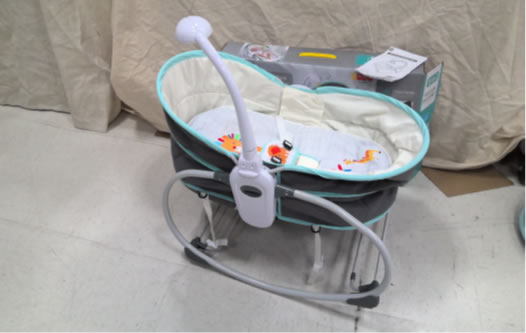
    WASHINGTON, D.C. – The U.S. Consumer Product Safety Commission (CPSC) is warning consumers to immediately stop using 5in1 Rocker Bassinets because they pose suffocation, strangulation, and fall hazards to infants.

    The bassinets fail to meet the safety requirements of CPSC’s Infant Sleep Products Rule.  The products do not conform to the safety requirements for bassinets and lack required markings, labeling, and instructions. The bassinets and their packaging also lack a tracking label containing certain information, such as the date of manufacture, required for children’s products including durable infant or toddler products.

    The importer, Rev Grace Import Inc., of Pleasant Hill, Missouri, is not cooperating with the CPSC on the recall of this product and not offering a remedy to consumers.

    The bassinets were sold online at Walmart.com and other websites. The bassinets were sold in green and gray color schemes and advertised and listed as a 5in1 Rocker Bassinet on the product packaging. The markings “Ya.Ya.Ya, 5IN1UPC Code 09331849600139, 01 Rock Sleeper, 02 Dream Centre, 03 Cozy Seat, 04 Travel Bassinet, 05 Rock & Play, Made in China, and Age 1-36 months” also appear on the packaging.

    CPSC urges consumers to immediately stop using the bassinets, disassemble them and dispose of them. Although the Infant Sleep Products Rule applies to products manufactured after June 23, 2022, CPSC urges firms to stop sale of non-compliant infant sleep products regardless of the date of manufacture. Report any incidents involving product injuries or defects to CPSC at www.SaferProducts.gov.

    Parents and caregivers are reminded:

    • The best place for an infant to sleep is on a firm, flat surface in a crib, bassinet or play yard.
    • Use a fitted sheet only and never add blankets, pillows, padded crib bumpers, or other items to an infant’s sleeping environment.
    • Infants should always be placed to sleep on their back. Infants who fall asleep in an inclined or upright position should be moved to a safe sleep environment with a firm, flat surface such as a crib, bassinet or play yard.

    Individual Commissioners may have statements related to this topic.  Please visit www.cpsc.gov/commissioners to search for statements related to this or other topics.
    5in1 Rocker Bassinets
  • CPSC Warns Consumers to Immediately Stop Using Sling Carriers Sold as Biayxms, Brottfor, Carolily Finery, Gotydi, Musuos, N\C, Topboutique, and Vera Natura Due to Infant Suffocation and Fall Hazards; Failure to Meet Federal Safety Standards

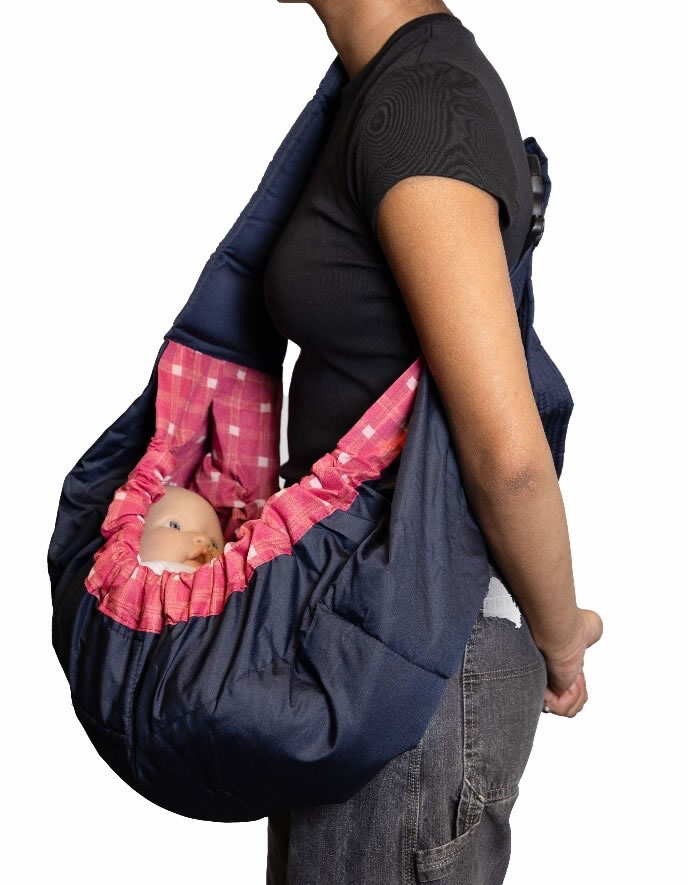
    WASHINGTON, D.C. – The U.S. Consumer Product Safety Commission (CPSC) is warning consumers to immediately stop using certain sling carriers because they do not comply with the federal safety standard for sling carriers and infants can fall out of them or suffocate. The sling carriers were sold on several websites including Walmart.comAmazon.com and Trendyhousehold.com and could also have been sold by unidentified retailers. The sling carriers do not include any brand name labeling. Due to the absence of labeling, consumers should review their purchase history to determine if their sling carrier is one identified in the table below affected by this warning.

    CPSC testing revealed that the sling carriers fail to meet the federal safety standard for sling carriers, including requirements for structural integrity and occupant retention, posing a fall hazard to babies. Additionally, the sling carriers pose a suffocation hazard because they fail to meet the federal safety standard’s requirements for restraint systems as the waist restraint can be used without the crotch restraint. Further, there are no warnings or instructional literature providing information to caregivers about keeping the baby’s face clear to prevent suffocation or safe positioning to prevent the baby from curling into a position with their chin resting on or near their chest. Sling carriers manufactured after January 30, 2018 are subject to the mandatory federal safety standard.

    The firms have not been responsive to CPSC’s request for a recall. 

    The sling carriers are designed to be worn by an adult to carry an infant. The carriers include an adjustable shoulder strap, black plastic buckle, and black hook-and-loop waist and crotch restraint. The exterior is solid navy fabric, and the interior colors and patterns vary.  The following products, including the brands and product descriptions were found in the online listings. The brand name is not listed on the products.

    Brand & Product Description on E-Commerce SiteManufacturer, Distributor, Retailer, or SellerE-Commerce Site
    BiayxmsWrap Baby Carrier, Stretchy Infant Sling, Adjustable Strap Hands Free Holder Monasi Products, Inc.Walmart.com
    BrottforBaby Carrier Blue, Wrap Baby Carrier Stretchy Infant Sling Adjustable Strap Hands Free HolderEliward Foryton Co., Ltd. D/B/A Brottfor, of Doniphan, Missouri Walmart.com
    Carolily FineryCarolilly Wrap Baby Carrier, Infant Sling, Adjustable Strap Hands Free Holder Shanghai Leiyuan Energy Technology Co., Ltd., of China Walmart.com
    GotydiGOTYDI Baby Carrier with Safety Lock Comfortable Infant Sling Breathable Baby Holder Adjustable Infant Wrap Ergonomic Holder Wrap for Easy Wearing Carrying of Newborn Shanghaifuniuzhin-engkejiyouxiangongsi D/B/A Gotydi, Inc., of China Walmart.com
    MusuosMusuos Wrap Baby Carrier, Stretchy Infant Sling, Adjustable Strap Hands Free Holder Shenzhenshimeihuida-wangluokejiyouxiangongsi, of China Walmart.com
    N\CNC Newborn Baby Swaddle with Sling TC Cotton Baby Carrier Hainanfeitengdayi-dianzishangwuyouxiangongsi D/B/A feitengdayi, of China Amazon.com
    TopboutiqueTopboutique Baby Carrier, Blue – Infant Sling, Perfect for Newborn Babies Topboutique LLCWalmart.com
    Vera NaturaChild Sling Baby Carrier Wrap Swaddling Nursing Papoose Pouch Front Carry For Newborn Baby Runwaer Style Trade, Inc., of Laramie, Wyoming Walmart.com
    N/AShoulder Sling Baby Carrier Trendy HouseholdTrendyhousehold.com

    Prices for the violative sling carriers ranged from about $17 to $70 in recent years. CPSC is aware of the Biayxms carriers offered for sale as early as March 2021 and the N\C carriers offered for sale as recently as June 2022.  

    CPSC urges consumers to immediately stop using the sling carriers, cut the straps to prevent future use, and dispose of the product. Report any incidents involving product defects or injuries to CPSC at www.SaferProducts.gov.

    Individual Commissioners may have statements related to this topic.  Please visit www.cpsc.gov/commissioners to search for statements related to this or other topics.
    Sling Carrier
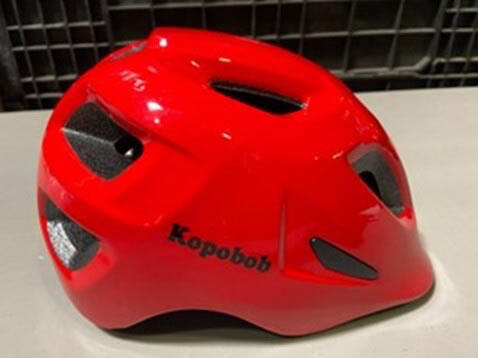
  • CPSC Warns Consumers to Immediately Stop Using Xingdetui Outdoor Kopobob Kids Multi-Purpose Helmets Due to Risk of Head Injury; Failure to Meet Federal Safety Standard for Bicycle Helmets

    WASHINGTON, D.C. – The U.S. Consumer Product Safety Commission (CPSC) is warning consumers to immediately stop using Kopobob kids multi-purpose helmets because they can fail to protect riders in the event of a crash, posing a risk of head injury. The helmets do not comply with the impact attenuation and certification requirements of the mandatory federal safety standard for bicycle helmets, which applies to multi-purpose helmets.

    The seller, Xingdetui Outdoor, of China, has not agreed to recall these helmets or offer a remedy to consumers. 

    The Kopobob kids multi-purpose helmets were sold online at www.amazon.com and other e-commerce sites for between $20 and $22. The helmets were sold in size Small, fitting a head circumference of about 18.9 to 21.25 inches. The helmets are red with black accents, with a black strap, a red and black buckle, and an adjustable spin dial on the back. The helmets have the word “Kopobob” on the sides in black lettering. A white warning label with “Model: WST-169” and “Made in China” is inside the helmet.

    CPSC tested the Kopobob kids multi-purpose helmets subject to this warning and determined the helmets failed to meet the federal safety standard. CPSC urges consumers to stop using, cut the straps, and dispose of these helmets immediately. Report any incidents involving product injuries or defects to CPSC at www.SaferProducts.gov.

    Individual Commissioners may have statements related to this topic.  Please visit www.cpsc.gov/commissioners to search for statements related to this or other topics.
  • CPSC Awards More than $2.0 Million in Pool Safely Grants to Eight State and Local Governments to Combat Pool and Spa Drownings and Drain Entrapments

    WASHINGTON, D.C. – U.S. Consumer Product Safety Commission (CPSC) Chair Alex Hoehn-Saric and U.S. Rep. Debbie Wasserman Schultz (FL-23) announced today eight awardees of a grant program aimed at preventing pool and spa drownings, as well as drain entrapments. The state and local governments were selected by CPSC, from a group of applicants, to receive more than $2 million in Pool Safely Grant Program (PSGP) grant funds. This funding appropriated by Congress will provide these state and local governments with assistance for education, training, and enforcement of pool safety requirements that are intended to save lives and prevent serious injuries.

    Pool Safely Grant Program Awards

    AwardeesState    Award Amount
    City of North Richland Hills     Texas    $319,485.91
    DuPage County Health Department     Illinois    $378,853.67
    Florida Department of Health     Florida    $400,000.00
    City of Huntington Beach     California    $141,837.00
    District of Columbia Health Department     District of Columbia    $64,530.00
    Seminole County         Florida    $194,535.00
    Harris County     Texas    $394,870.00
    City of Amarillo     Texas    $107,853.92

    “Drowning remains the number one cause of death for children ages one to four,” said CPSC Chair Alex Hoehn-Saric. “These grants can make a real difference by providing funding to assist communities in their lifesaving work to reduce the risk of drowning and drain entrapment in pools and spas.”  

    “We must do more to prevent drownings, the leading killer of America’s youngest children,” said Rep. Debbie Wasserman Schultz. “We can avoid these devastating tragedies by teaching children to swim, ensuring pools have the right safety equipment, and educating parents on the vital importance of supervising children in and near the water – and these grants are critical tools to help us do that.”

    The Virginia Graeme Baker Pool and Spa Safety Act (VGB Act), which Rep. Wasserman Schultz authored and championed, was passed by Congress and signed into law by President George W. Bush in December 2007. The VGB Act authorizes the PSGP, which provides state and local governments with assistance for education, training, and enforcement of pool safety requirements.

    CPSC’s website www.PoolSafely.gov has more information on the Pool Safely Grant Program and the VGB Act as well as free, downloadable educational materials available to the public.

    Individual Commissioners may have statements related to this topic.  Please visit www.cpsc.gov/commissioners to search for statements related to this or other topics.

  • 6 Tips to Help Put Your Mind at Ease During Baby Safety Month

    To all the new and expecting moms and dads out there, congratulations. You’re going to be amazing parents and we’ll be right here with you so you’re not alone.

    Baby Safety Month is all about getting you the information you need to put your mind at ease when it comes to the safety of your new baby.

    So here are six simple tips to get you started.

    • Place babies on their backs for naps and at night until they are 1 year old. For the safest sleep environment for your baby, a firm mattress and fitted sheet are all you need so remove blankets, bumpers, toys, and other soft objects from your baby’s crib. Learn more about sleep safety.
    • Check to make sure your car seat is installed correctly. Using a properly installed car seat is the best way to keep your child safe in the car. Certified Child Passenger Safety Technicians are here to help you or check out our Ultimate Car Seat Guide, available in English and Spanish, for expert advice on how to choose and use your car seat.
    • Keep babies strapped in when using highchairs, infant carriers, swings, and strollers.Stay within arm’s reach when your baby is on higher surfaces like beds, sofas, or changing tables. Learn more about preventing falls.
    • Set your water heater to 120° F to avoid burns. Test the bath water with your elbow or your wrist. The water should feel warm, not hot. And avoid drinking or carrying hot beverages or foods when holding your baby. Learn more about burn prevention.
    • Keep medicine, cleaning products, and small objects like button batteries up and away, out of reach and sight. And take a moment to save the Poison Help number in your phone and post it visibly at home: 1-800-222-1222. Learn more about choking prevention.
    • Install working smoke alarm AND a carbon monoxide alarm on every level of your home, and in all sleeping areas. This is an important tip for not just baby safety, but family safety as well. And please test the alarms regularly to make sure they work. Learn more about fire prevention.