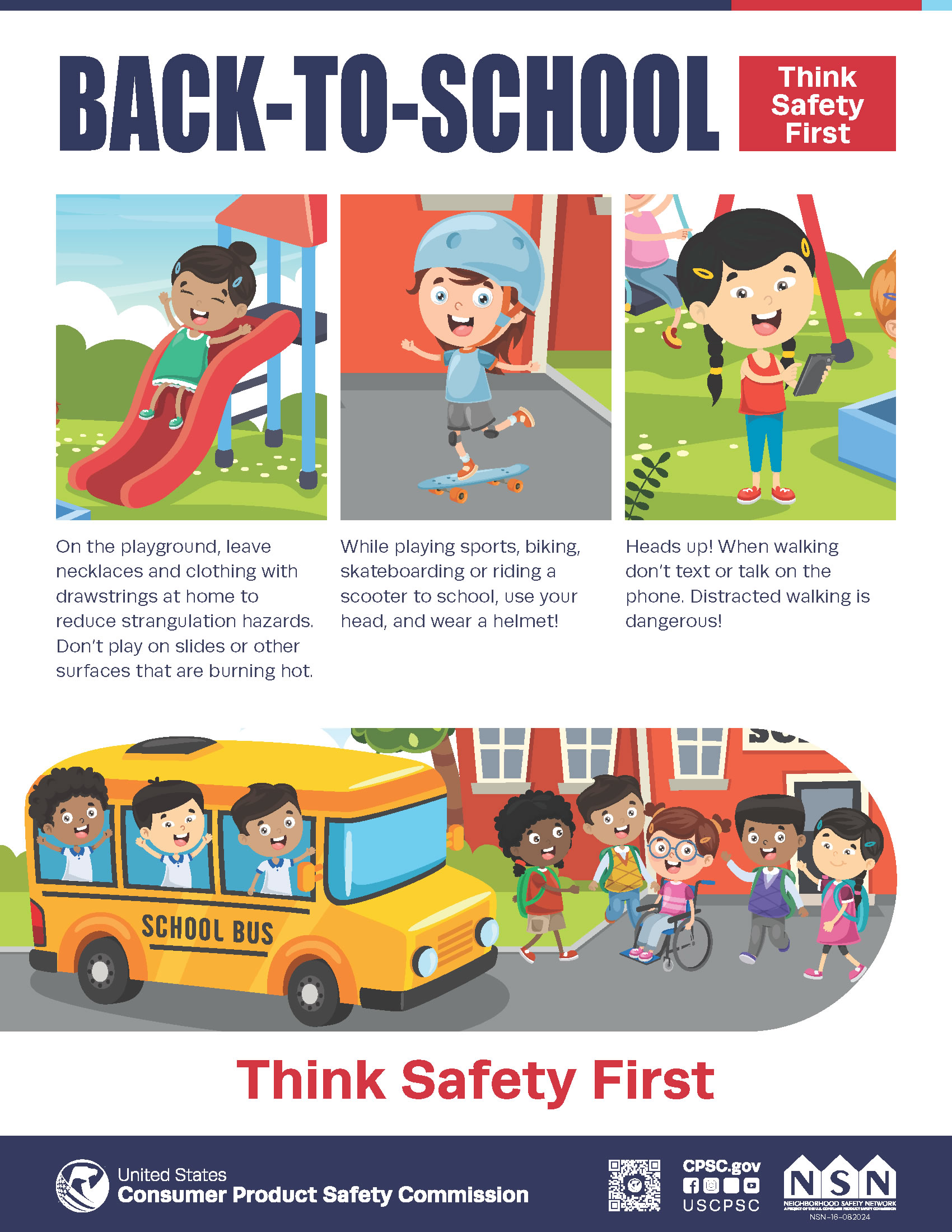
As the new school year begins, the U.S. Consumer Product Safety Commission (CPSC) is urging parents, teachers and students to watch out for hidden hazards at school.
Every year, thousands of children are injured on playgrounds, while playing sports, or as they walk, bike, skateboard or scooter to and from school.
Prevent injuries before they happen by following these safety tips when heading back to school:
Playgrounds:
Leave necklaces and clothing with drawstrings at home to reduce strangulation hazards. Check for “S” hooks, protruding bolt ends, and sharp points or edges on playground equipment. Don’t play on slides or other surfaces that are burning hot. Check that the playground has good impact surfacing such as nine inches of mulch/wood chips.
Wear Helmets:
Wear a helmet when biking, skateboarding, or riding a scooter to and from school, or while playing sports.
Distracted Walking:
Don’t text or talk on the phone while walking. Distracted walking can be dangerous, especially near traffic and crosswalks.
Don’t become a statistic! “Think Safety First” when heading back to school.
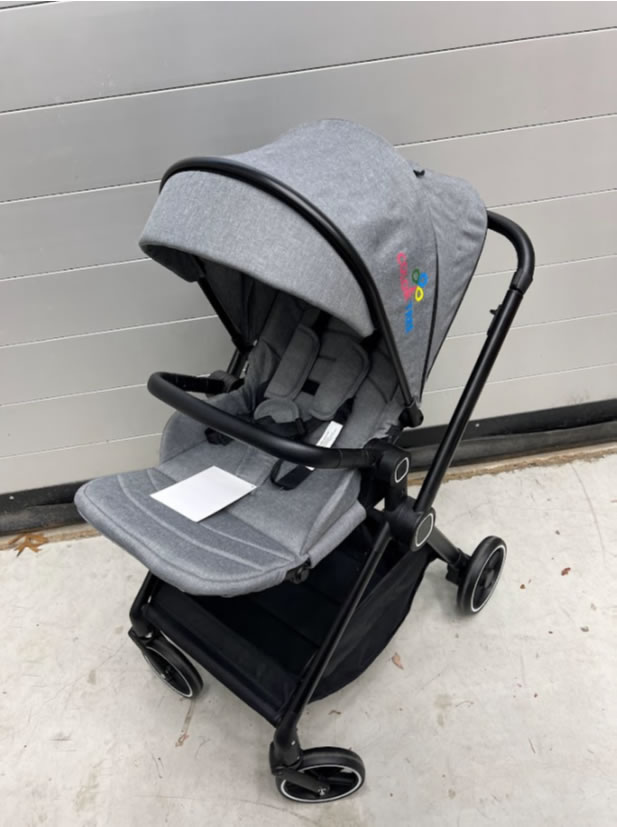
WASHINGTON, D.C. – The U.S. Consumer Product Safety Commission (CPSC) is warning consumers to immediately stop using and dispose of COLOR TREE strollers because they pose risks of entrapment and strangulation to children. The products violate the federal safety regulations for strollers because a child’s head can become entrapped between the seats and grab bars, posing a strangulation hazard.
CPSC issued Notices of Violations to the importers, Karmas Far Inc., of Rancho Cucamonga, California and SmartTech Mobile USA Inc., of Jacksonville, Florida, both of which have been unresponsive to a recall of this product.
The strollers have a black frame and grab bar and a gray fabric seat and canopy. “COLOR TREE” is printed on the canopy and “Karmas Far Inc.” is printed on the back of the seat frame. The strollers were manufactured in China and sold on Karmasfar.us, Amazon.com, Walmart.com and Ebay.com for between $90 and $120 from November 2021 through November 2023.
CPSC urges consumers to stop using and dispose of the strollers immediately.To destroy the products, first detach the wheels, then remove the grab bar, fabric seat and canopy. Dispose of the pieces in the trash in accordance with local garbage collection policies. Do not sell or give away these hazardous strollers.
Report any incidents involving injury or product defect to CPSC at www.SaferProducts.gov.
Individual Commissioners may have statements related to this topic. Please visit www.cpsc.gov/commissioners to search for statements related to this or other topics.
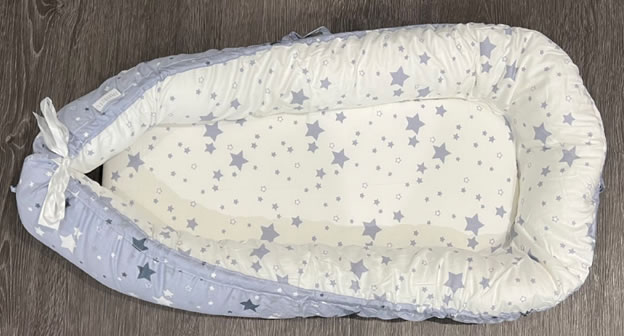
WASHINGTON, D.C. – The U.S. Consumer Product Safety Commission (CPSC) is warning consumers to immediately stop using and dispose of Mamibaby, Yoocaa, DHZJM, Cosy Nation and Hyhuudth loungers because they were advertised as sleep products but create an unsafe sleep environment posing risks of suffocation, entrapment and falls for infants and the manufacturer has not agreed to conduct a recall.
CPSC is aware of a total of five infant deaths reported as occurring in Mamibaby, Yoocaa and DHZJM-branded baby loungers.
Mamibaby: Two infants aged 10-days and five-months old died in 2020 and 2021 in Mamibaby-branded baby loungers when the products were used for bedsharing.
Yoocaa: Two infant deaths were reportedly associated with Yoocaa-branded baby loungers including one in 2021 involving a three-month-old who was reportedly placed in a Yoocaa-branded baby lounger on top of an adult bed and then found fatally entrapped between the adult bed and the bedroom wall. The other death occurred in 2022, involving a four-month-old who was reportedly found unresponsive after being placed to sleep in a Yoocaa-branded baby lounger with a blanket.
DHZJM: The fifth infant death occurred in 2020 in a DHZJM-branded baby lounger involving a four-month-old who was reportedly found unresponsive and face down on a blanket that was placed on top of the lounger. This death was previously reported in a CPSC warning on June 6, 2024.
The Mamibaby, Yoocaa, DHZJM and Cosy Nation baby loungers evaluated by CPSC violate the federal safety regulations for Infant Sleep Products because the sides are too low to contain the infant; the sleeping pad is too thick, posing a suffocation hazard; and an infant could fall out of an enclosed opening at the foot of the lounger or become entrapped. All five brands of baby loungers do not have a stand, posing a fall hazard if used on elevated surfaces. These violations create an unsafe sleeping environment for infants.
Ningbo Tree Nest Children Products CO., Ltd., of China, is identified as the manufacturer on the Yoocaa, DHZJM, and Hyhuudth loungers, and is reported to be the manufacturer of the Mamibaby and Cosy Nation branded loungers sold on Amazon.com.
At this time, the manufacturer has not agreed to recall the following violative products: Mamibaby-branded baby loungers were sold online at Walmart.com from March 2023 through December 2023 for about $43. Mamibaby-branded and Cosy Nation-branded baby loungers were sold online at Amazon.com from June 2023 through June 2024 for between $31 and $50. Yoocaa-branded baby loungers were sold online at Amazon.com from January 2021 through June 2023 for between $20 and $87. DHZJM-branded loungers were sold online at Amazon.com from April 2019 through November 2023 for between $17 and $49. Hyhuudth-branded baby loungers were sold online at Amazon.com from May 2023 through August 2024 for between $39 and $46.
However, two third-party sellers of these products agreed to recall the particular products they sold. Specifically, Hangzhoumeixiajianzhushejiyouxiangongs, of China, doing business as MEIXIA Shop and Softbless recalled [LINK] the Mamibaby and Cosy Nation-branded baby loungers sold on Amazon.com. He Nan Ji Bu Gong Yi Pin You Xian Gong Si, of China, doing business as Yoocaa Direct recalled the Yoocca-branded lounger on November 2, 2023. It appears these two third-party sellers did not sell the branded baby loungers at the time of the infant deaths and/or did not sell the styles and printed fabric options involved in the infant deaths.
The Mamibaby, Yoocaa, DHZJM, Cosy Nation and Hyhuudth-branded baby loungers were sold in multiple styles and printed fabric options by various third-party sellers and on other websites.
All five brands of baby loungers included tags sewn inside the lounger covers which state in part, “SLEEPING SET.” Most Mamibaby, DHZJM, Cosy Nation and Hyhuudth baby loungers evaluated by CPSC also included a tag sewn onto the exterior of the lounger cover with the applicable brand name. CPSC is also aware of some units sold without a sewn-on brand tag. DHZJM and Hyhuudth baby loungers also include a manufacturer tag sewn inside the lounger cover stating “Ningbo Tree Nest Children Products CO. ltd.” Yoocaa baby loungers evaluated by CPSC did not include on-product brand name labels but did identify the manufacturer “Ningbo Tree Nest Children Products Ltd” on the packaging.
CPSC urges consumers to stop using and destroy Mamibaby, Yoocaa, DHZJM, Cosy Nation, and Hyhuudth baby loungers immediately and seek a recall remedy if available. Do not sell or give away these hazardous baby loungers. To destroy the product, remove the fabric cover, cut-up the lounger cover and interior sleeping pad, and then dispose of the pieces in the trash or textile recycling in accordance with local garbage collection policies.
Although the Infant Sleep Products regulation is applicable to products manufactured on or after June 23, 2022, these loungers do not have a required date of manufacture label on the product, and therefore, CPSC urges consumers to stop using all Mamibaby, Yoocaa, DHZJM, Cosy Nation and Hyhuudth baby loungers. Further, CPSC continues to advise firms to stop sale of non-compliant infant sleep products regardless of the date of manufacture.
Parents and caregivers are reminded:
The best place for an infant to sleep is on a firm, flat surface in a crib, bassinet or play yard.
Use a fitted sheet only and never add blankets, pillows, padded crib bumpers, or other items to an infant’s sleeping environment.
Infants should always be placed to sleep on their back. Infants who fall asleep in an inclined or upright position should be moved to a safe sleep environment with a firm, flat surface such as a crib, bassinet or play yard.
Report any incidents involving injury or product defect to CPSC at www.SaferProducts.gov.
Individual Commissioners may have statements related to this topic. Please visit www.cpsc.gov/commissioners to search for statements related to this or other topics.
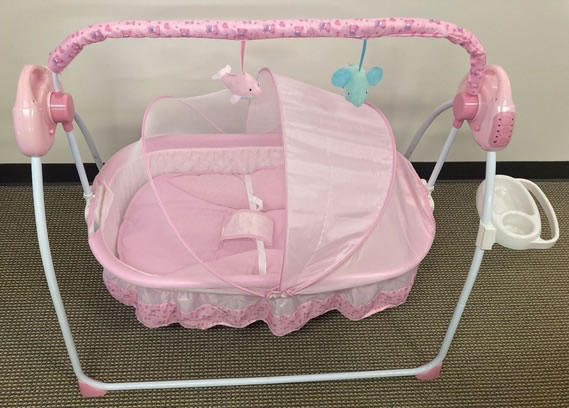
WASHINGTON, D.C. – The U.S. Consumer Product Safety Commission (CPSC) is warning consumers to immediately stop using DNYSYSJ and OUKANING cradle swings because they pose suffocation and fall hazards for infants.
CPSC is aware of an infant’s death in 2021 reported as occurring in a cradle swing with a similar design, including a similar thick, segmented sleeping pad with an occupant restraint system. A three-month-old was sleeping in the cradle swing and then found unresponsive.
The cradle swings violate the federal safety regulations for bassinets and cradles. The swings pose a suffocation risk due to the folds of the segmented sleeping pad, and due to the thickness of the sleeping pad. In addition, the swing poses a fall hazard because the sides are too low to contain the infant above the thick sleeping pad. Additionally, the occupant restraint system within the sleep area could restrict the infant’s movement, violating the federal safety regulations for infant swings as well as the federal safety regulations for bassinets and cradles. The DNYSYSJ cradle swings also violated other safety requirements for infant swings including unintentional folding.
The CPSC issued Notices of Violation to the sellers, henanyaopushiyeyouxiangongsi, of China, doing business as HangBao and zhudongkun for the DNYSYSJ brand and Chengduzhishanditongshangmaoyouxiangongsi, of China, doing business as Lushui and Fuli for the OUKANING brand. They did not agree to recall these cradle swings or offer a remedy to consumers. In addition, the cradle swings were reportedly sold by several other sellers on Amazon.com, including KUMOYOU and JAJADAH for the DNYSYSJ brand and Yangjiafu and FUYINGHAO for the OUKANING brand. These cradle swings may have been sold on other websites as well.
The DNYSYSJ cradle swings were sold online at Amazon.com from October 2021 through May 2024 for between $95 and $130. CPSC tested the pink cradle swings, and CPSC is aware the cradle swings were also sold on Amazon.com in blue, dark blue, gray and khaki. The cradle swings are powered using the included USB charging cord. They have a thick mattress with three segments and a combination waist and crotch restraint system. The cradle swings include a removable head pillow, a removable mesh and fabric canopy, two hanging toys, an attached tray and cupholder accessory, and a gray and white remote control. The brand name “DNYSYSJ” and seller name are not identified on the product.
The OUKANING cradle swings were sold online at Amazon.com from October 2021 through February 2023 for between $80 and $145. CPSC tested the pink cradle swings, and CPSC is aware the cradle swings were also sold on Amazon.com in blue and khaki. The cradle swings are powered using AA batteries or the included USB charging cord. They have a thick mattress with three segments and a combination waist and crotch restraint system. The cradle swings include a removable head pillow, a removable mesh and fabric canopy, two hanging toys, and a white remote control. The brand name “OUKANING” and seller name are not identified on the product.
The best place for an infant to sleep is on a firm, flat surface in a crib, bassinet or play yard.
Use a fitted sheet only and never add blankets, pillows, padded crib bumpers, or other items to an infant’s sleeping environment.
Infants should always be placed to sleep on their back. Infants who fall asleep in an inclined or upright position should be moved to a safe sleep environment with a firm, flat surface such as a crib, bassinet or play yard.
Report any incidents involving injury or product defect to CPSC at www.SaferProducts.gov.
Individual Commissioners may have statements related to this topic. Please visit www.cpsc.gov/commissioners to search for statements related to this or other topics.
WASHINGTON, D.C. – The U.S. Consumer Product Safety Commission (CPSC) is warning consumers to immediately stop using and dispose of magnetic ball sets sold by Dongguan Qihangren Trade because the loose, hazardous magnets pose a risk of serious injury or death if ingested by children.
CPSC testing determined the magnets do not comply with the requirements of the mandatory federal regulation for magnet toys because they contain one or more strong magnets that fit within CPSC’s small parts cylinder.
When high-powered magnets are swallowed, the ingested magnets can attract to each other, or to another metal object, and become lodged in the digestive system. This can result in perforations, twisting and/or blockage of the intestines, infection, blood poisoning and death.
CPSC estimates 2,400 magnet ingestions were treated in hospital emergency departments annually from 2017 through 2021. CPSC is aware of eight deaths since 2005 involving the ingestion of hazardous magnets, including two outside of the United States.
CPSC issued a Notice of Violation to the seller, Dongguan Qihangren Trade Co. Ltd., of China, but the firm has not agreed to an acceptable recall or offer a remedy to consumers. The 216-Piece magnetic ball sets were sold online at www.us.shein.com for about $9.
The sets of silver magnetic balls were sold in the form of a cube. The sets were sold encased in a clear plastic case and a portable tin storage box.
CPSC urges consumers to stop using the Magnetic Ball Sets immediately, take them away from children, and dispose of them.
Report any incidents involving injury or product defect to CPSC at www.SaferProducts.gov.
Individual Commissioners may have statements related to this topic. Please visit www.cpsc.gov/commissioners to search for statements related to this or other topics.
WASHINGTON, D.C. – The U.S. Consumer Product Safety Commission (CPSC) is warning consumers to immediately stop using certain Hush Hutting Crib Mattresses and play yard mattresses due to flammability and suffocation risks.
There is a risk of suffocation with the Hush Hutting 5″ Memory Foam Crib Mattresses, Pack and Play Mattress Toppers, Pack and Play Foldable Mattresses, Memory Foam Crib Mattresses, Pack and Play Breathable Bamboo Mattresses, and Pack and Play Mattress Pads because the mattresses are too thick or are undersized in violation of the federal safety regulation for crib mattresses. These products also fail to meet federal regulations for warnings, labeling and consumer registration requirements.
The Hush Hutting 5″ Memory Foam Crib Mattress also poses a fire hazard because it fails to meet federal flammability requirements.
The CPSC issued a Notice of Violation to the seller, QiDong ShenSheng MaoYi Co. Ltd., of China, doing business as Hush Hutting. Hush Hutting has not agreed to recall these mattresses or offer a remedy to consumers.
About 28,900 crib and play yard mattresses were sold on Amazon.com from September 2022 through August 2023 for between $30 and $70. CPSC testing determined the following crib and play yard mattresses violate federal safety regulations:
Product
Description
Hush Hutting 5″ Memory Foam Crib Mattress
Dual Sided Waterproof, Double-Layer, Removable Bamboo Mattress Cover, White & Blue
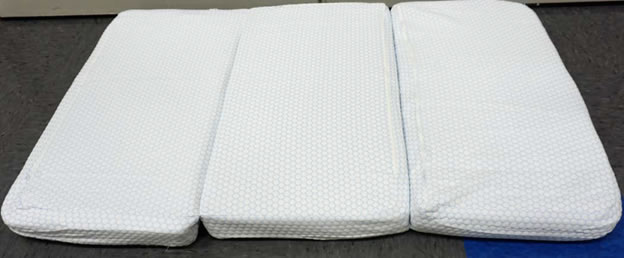
Hush Hutting Pack and Play Foldable Mattress Topper
Trifold Pack n Play Mattresses, Foldable Memory Foam with Washable Cover, 38″x26″x3″, Includes Carry Bag
Hush Hutting Pack and Play Mattress
Portable Mattress Topper, Memory Foam Mattress with Removable Cover, 38″x26″x3″
Hush Hutting Memory Foam Crib Mattress
Waterproof, Portable Baby Mattress with Removable Bamboo Mattress Cover, 52″x28″x2″, White
Pack and Play Breathable Bamboo Mattress
Waterproof Pack and Play Mattress, Breathable Bamboo, Memory Foam with Removable Zippered Cover, 38″x26″x3″, White
Hush Hutting Pack and Play Mattress Pad
Portable Pack N Play Mattress Pad, Memory Foam with Removable Zippered Cover, 38″x26″x3″
CPSC urges consumers to stop using these crib and play yard mattresses immediately, and dispose of them in accordance with local disposal requirements for mattresses. Do not sell or give away these hazardous mattresses.
Hush Hutting 5″ Memory Foam Crib Mattress
Report any incidents involving injury or product defect to CPSC at www.SaferProducts.gov.
Individual Commissioners may have statements related to this topic. Please visit www.cpsc.gov/commissioners to search for statements related to this or other topics.
CPSC Releases New Data on Fireworks-Related Injuries and Deaths
WASHINGTON, D.C. – It’s that time of year when Americans everywhere will be celebrating the Fourth of July holiday with family, friends and fireworks. A new report from the U.S. Consumer Product Safety Commission (CPSC) highlights the hazards posed by consumer use of fireworks. CPSC is raising awareness and sharing safety tips to prevent these types of injuries and deaths over the holiday.
For 2023, CPSC received reports of eight deaths and an estimated 9,700 injuries involving fireworks. Out of the eight deaths, five were associated with firework misuse, two with a device malfunction, and one involves unknown circumstances.
The report shows that between 2008 and 2023, injuries from fireworks have increased overall, despite recent data showing a steady decline since the peak in 2020 during the pandemic when public displays were canceled.
“While it is a great American tradition to enjoy fireworks around the 4th of July, it is important to remember that all fireworks, even sparklers, pose dangers to consumers. The safest way to view fireworks is to watch professional displays,” said CPSC Chair Alex Hoehn-Saric. “If you choose to light your own, make sure you only buy legal fireworks intended for consumer use from a reputable retailer. And follow the simple safety tips provided below and on CPSC’s website.”
To understand more about fireworks-related injuries hazards around the 4th of July, CPSC conducted an analysis of the injury data in the four weeks surrounding the holiday in 2023 and found the following:
Teenagers ages 15 to 19 years of age had the highest estimated rate of emergency department-treated, fireworks-related injuries, with children ages 5-9 years old having the second highest rate.
There were an estimated 800 emergency department-treated injuries associated with firecrackers and 700 with sparklers.
The parts of the body most often injured by fireworks were hands and fingers (an estimated 35 percent of injuries) along with head, face, and ears (an estimated 22 percent).
About 42 percent of the emergency department-treated fireworks-related injuries were for burns.
In fiscal year 2023, approximately 18% of selected and tested fireworks products were found to contain noncompliant components, including fuse violations, the presence of prohibited chemicals and pyrotechnic materials overload.
CPSC urges consumers to celebrate safely this holiday by following these safety tips:
Tips to Celebrate Safely
Never allow children to play with or ignite fireworks, including sparklers. Sparklers burn at temperatures of about 2,000 degrees Fahrenheit—hot enough to melt some metals.
Make sure fireworks are legal in your area, and only purchase and set off fireworks that are labeled for consumer (not professional) use.
Never use fireworks while impaired by alcohol or drugs.
Keep a bucket of water or a garden hose handy, in case of fire or other mishap.
Light fireworks one at a time, then move back quickly.
Never try to relight or handle malfunctioning fireworks. Soak them with water and throw them away.
Never place any part of your body directly over a fireworks device when lighting the fuse. Move to a safe distance immediately after lighting fireworks.
Never point or throw fireworks (including sparklers) at anyone.
After fireworks complete their burning, to prevent a trash fire, douse the spent device with plenty of water from a bucket or hose before discarding the device.
WASHINGTON, D.C. – The U.S. Consumer Product Safety Commission (CPSC) is warning consumers to immediately stop using Xastro fuel bottles sold by Zhengzhou Weipai Jiajuyou Xian Gongsi because they pose a risk of poisoning and burns to children due to lack of a child resistant closure, which violates the Children’s Gasoline Burn Prevention Act.
Furthermore, the fuel bottles pose a flash fire hazard to all users because they lack a flame mitigation device. Under the Portable Fuel Container Safety Act, portable fuel containers manufactured after July 12, 2023, must have flame mitigation devices that impede the propagation of a flame into the container. The manufacture dates of the bottles are unknown. Additionally, the labeling violates the Federal Hazardous Substances Act because it lacks mandatory safety information.
CPSC issued a Notice of Violation to the seller Zhengzhou Weipai Jiajuyou Xian Gongsi, of China, doing business as WPHome, but the firm has not agreed to recall these fuel bottles or offer a remedy to consumers. Consumers who purchased the product will receive this notice directly.
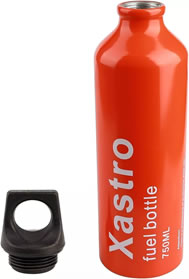
The fuel bottles were sold online at Amazon.com from July 2021 through April 2024 for about $12. The Xastro fuel bottle is orange with a black cap and white markings “Xastro,” “fuel bottle”, “750ML”, and warnings and instructions in English with a skull and crossbones symbol and a fire pictogram.
CPSC urges consumers to stop using the fuel bottles immediately and to dispose of them empty in the trash.
Pictures:
Report any incidents involving injury or product defect to CPSC at www.SaferProducts.gov.
Individual Commissioners may have statements related to this topic. Please visit www.cpsc.gov/commissioners to search for statements related to this or other topics.
WASHINGTON, D.C. – The U.S. Consumer Product Safety Commission (CPSC) is warning consumers about the risk of serious injury or death associated with defective smoke and carbon monoxide detectors manufactured by Shenzhen Lidingfeng Tech. sold under multiple brand names, including PetUlove, ORIKLON, SENCKIT, Kingebai, Gaoducash, LDASEC, and AMS. The defective detectors have model number JSN-JY-909COM. Consumers should immediately dispose of these products and install new detectors.
The detectors can fail to alert consumers to the presence of smoke. Smoke sensitivity testing by CPSC found that they fail UL 217, the voluntary safety standard for smoke alarms, and may not alert consumers in the event of a house fire.
In typical residential fire scenarios, there may be as little as three minutes to escape after a smoke alarm sounds before the conditions in the home become incapacitating or deadly. An estimated 2,440 people in the United States die every year from residential structure fires. Furthermore, the risk of dying in a fire is twice as high in homes without a working smoke alarm as compared to homes with smoke alarms.
Shenzhen Lidingfeng Tech. Co., Ltd., of China has been unresponsive to CPSC’s request to recall the products.
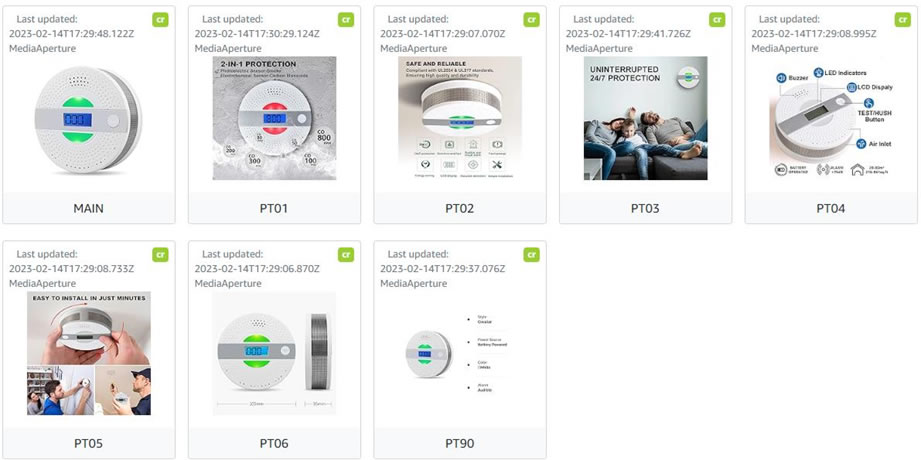
The combination detectors are made of white plastic and measure about 4 x 1.5 x 4 inches, featuring a digital display, “CO & Smoke Alarm,” the model number, and “Shenzhen Lidingfeng Technology Co Ltd” are printed on a white sticker on the detectors. The combination detectors are advertised to detect dangerous levels of carbon monoxide and smoke and alert with a flashing red LED and a loud alarm pattern. Model No. JSN-JY-909COM was sold under the Amazon ASINs B09B9WLQGZ, B0B9XZSZS8, B0BLMWFT1N, B09WK3KVPH, B09WK3ZQYG, and B0CGZK53VP on Amazon.com for between $17 and $30. The combination detectors were also sold online at Snapklik.com, Desert CRT U.S., TVCMall.com, Kmart, Sears, Mega-DiscountStore.com, AliExpress, Alibaba, eBay, ATO.com, and Chimiya.com.
CPSC urges consumers not to purchase or sell these combination smoke and CO detectors. Stop using them, dispose of them in the trash after removing batteries, and install new smoke detectors.
Note: Consumers should install combination smoke and CO detectors on each level of their homes and outside separate sleeping areas. Combination smoke and CO detectors should be battery operated or have battery backup. Test combination smoke and CO detectors frequently and replace batteries as needed. Consumers should only buy combination smoke and CO detectors that meet both the UL 2034 and UL 217 safety standards.
Pictures:
Report any incidents involving injury or product defect to CPSC at www.SaferProducts.gov.
Individual Commissioners may have statements related to this topic. Please visit www.cpsc.gov/commissioners to search for statements related to this or other topics.