Category: Public Service Announcement

  • CPSC Warns Consumers to Immediately Stop Using Swagtron SG-5 Swagger 5 Boost Commuter Electric Scooters Due to Fire and Burn Hazards; Risk of Serious Injury and Death

    Release Date: October 17, 2024

    Release Number: 25-014

    WASHINGTON, D.C. – The U.S. Consumer Product Safety Commission (CPSC) is warning consumers to immediately stop using Swagtron SG-5 Swagger 5 Boost Commuter Electric Scooters because they pose fire and burn hazards. CPSC has received seven reports of the electric scooters overheating, smoking, melting, or igniting, with one ignition resulting in a fire causing a burn injury and substantial property damage to a residential apartment building in Pittsburgh, Pennsylvania in November 2023.

    Swagtron, of South Bend, Indiana has not been responsive to CPSC’s request for information about this product or for CPSC’s request for a recall. 

    CPSC is also aware of 139 reports of fire or other thermal incidents involving other Swagtron products. Consumers should consider these reports, the lack of information about compliance with voluntary safety standards, and the company’s failure to provide safety information about their products to CPSC when deciding whether to buy or use the company’s products.

    CPSC urges consumers to immediately stop using and charging these electric scooters and dispose of them following local hazardous waste disposal procedures. 

    The electric scooters are sold in black or silver colors. “SWAGGER 5” is printed in large lettering on the stem of the handlebars   The electric scooters are sold at Tractor Supply, Best Buy, Walmart, Sam’s Club and online at SWAGTRON.com, Amazon.com, eBay.com, Walmart.com, BestBuy.com, SamsClub.com and TractorSupply.com from 2019 to the present for between $140 and $607.

    Note: Lithium-ion batteries should be disposed of in accordance with any local and state ordinances, following the procedures established by your municipal recycling center for lithium batteries, because these potentially hazardous batteries must be handled differently than other batteries. Do not throw this battery in the trash.

    Report incidents involving these electric scooters, or any product-related injury, on www.SaferProducts.gov.

    Pictures available here: https://www.cpsc.gov/Newsroom/News-Releases/2025/CPSC-Warns-Consumers-to-Immediately-Stop-Using-Swagtron-SG-5-Swagger-5-Boost-Commuter-Electric-Scooters-Due-to-Fire-and-Burn-Hazards-Risk-of-Serious-Injury-and-Death

    Individual Commissioners may have statements related to this topic.  Please visit www.cpsc.gov/commissioners to search for statements related to this or other topics.

  • A Proclamation on National Youth Substance Use Prevention Month, 2024

    SEPTEMBER 30, 2024

    America’s young people are the future of our Nation.  Each of them deserves the opportunity to thrive and reach their full potential.  This National Youth Substance Use Prevention Month, we recommit to providing all youth with the resources and support they need to lead healthy lives and achieve their dreams.

         Addressing the opioid and overdose epidemic is a key priority of my Unity Agenda.  Preventing substance use before it starts is a crucial part of a comprehensive approach to addressing the overdose crisis.

         That is why, as President, I am taking bold action to help schools, families, and communities to prevent youth substance use and improve the well-being of our Nation’s youth.  Through the Bipartisan Safer Communities Act, my Administration made the largest investment in youth mental health ever, including $1 billion of funding to train and hire new school based mental health professionals across the country.  We are supporting substance use prevention training for school administrators and counselors and improving mental health and substance use screening tools so students can get the health services they need.  We have also made it easier for schools to leverage Medicaid to deliver mental health and substance use care to millions of children and youth.  And we are engaging youth as partners to develop and strengthen community strategies for youth to better educate and support their peers, working toward our shared goal of getting ahead of substance use before it starts.

         Over the past 3 years, we have made historic investments in strengthening local youth prevention and public awareness campaigns across the country.  Through our Drug-Free Communities Support Program, we are implementing prevention efforts in all 50 States, significantly reducing youth substance use in these communities.  Further, my Administration launched a social media campaign to educate youth on the dangers of fentanyl and the life-saving effects of opioid overdose reversal medications.  We also used this prevention content to prepare classroom resources for middle and high school students.  Together, we are emboldening our Nation’s youth with the knowledge and tools they need to make informed and empowered decisions.

         We are also taking aggressive action to reduce the supply of illicit drugs before they hit our streets.  Under my leadership, Federal law enforcement is keeping more deadly drugs out of our communities than ever before by stopping illicit fentanyl at ports of entry, prosecuting thousands of drug traffickers, sanctioning individuals and organizations involved in the global illicit drug trade, and engaging globally to disrupt drug trafficking organizations.

         We have made immense progress in preventing the use and misuse of substances and preventing youth from developing substance use disorders.  We are mobilizing communities to take action and stay informed, providing historic amounts of funding to prevent substance use and overdose, and focusing on what works — evidence-based policies, strategies, and programs.  Together with youth, parents, mentors, and leaders from all sectors of communities around our great Nation, we are working to ensure every young person is nurtured in a safe, supportive, thriving environment.  But to improve the lives of youth impacted by substance use and honor all the young lives tragically lost to an overdose, we can and must do more.  This month, we recommit to fulfilling our Nation’s duty to leave no one behind and extend support to those who need it.  America’s youth deserve nothing less than our unwavering commitment to their well-being.

         If you are struggling with substance use or just need someone to talk to, speak to a loved one or health care provider, contact the Substance Abuse and Mental Health Services Administration’s National Helpline at 1-800-662-HELP or visit FindSupport.gov.  If you or someone you love is experiencing a mental health or substance use crisis, you can call or text 988, or visit 988lifeline.org for free, confidential crisis support.

         NOW, THEREFORE, I, JOSEPH R. BIDEN JR., President of the United States of America, by virtue of the authority vested in me by the Constitution and the laws of the United States, do hereby proclaim October 2024 as National Youth Substance Use Prevention Month.  Let us all take action to implement practice- and evidence-based prevention strategies and improve the health of our Nation.

         IN WITNESS WHEREOF, I have hereunto set my hand this thirtieth day of September, in the year of our Lord two thousand twenty-four, and of the Independence of the United States of America the two hundred and forty-ninth.

                                  JOSEPH R. BIDEN JR.

  • New CPSC Report Shows Unsafe Sleep Environments Are Leading Cause of Injuries and Deaths with Nursery Products

    Release Date: September 19, 2024

    Release Number 24-365

    WASHINGTON, D.C. –  A new report from the U.S. Consumer Product Safety Commission (CPSC), shows that injuries and deaths associated with nursery products persist among children younger than age five. The report, Injuries and Deaths Associated with Nursery Products Among Children Younger than Age Five, shows that on average, more than 170 infant deaths were associated with nursery products annually between 2019-2021. Unsafe sleeping environments – such as those that include soft bedding added to the cribs, playpens/play yards or bassinets/cradles – accounted for 126 deaths during that three-year period.  

    CPSC’s latest data show that between 2019 and 2021:

    • There were 523 deaths reported among children younger than age five – an annual average of 174 deaths – associated with, but not necessarily caused by, nursery products.
    • Cribs/mattresses, bassinets/cradles, playpens/play yards, inclined infant sleep products, and infant carriers were associated with most (76 percent) of the fatalities reported from 2019 through 2021.

    The report also highlighted racial disparities in nursery product-related deaths, including:

    • When focused solely on nursery product-related deaths with known race, on average, from 2019 through 2021, African American children made up 33 percent of deaths, more than double their 15 percent share in the population. 

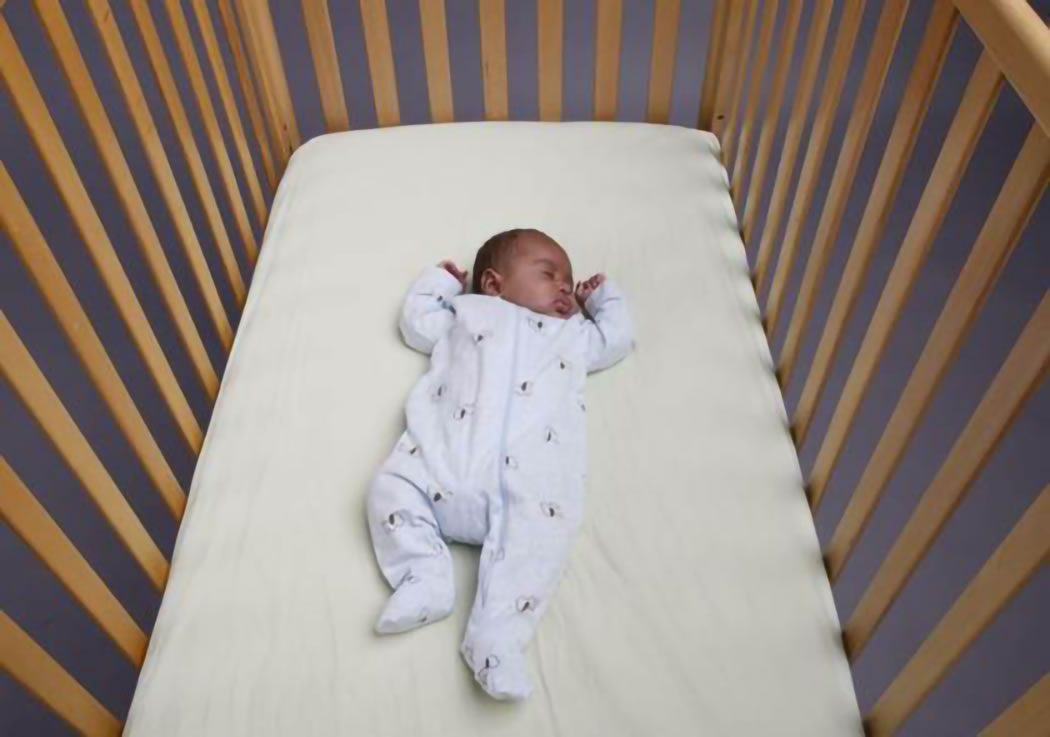
    During September’s Baby Safety Month, CPSC is urging parents and caregivers to put their babies to sleep only in products that are safe for sleep–such as bassinets, cribs, play yards and bedside sleepers that meet federal standards with no soft bedding added, just a fitted sheet.  Babies who fall asleep in other locations should be moved to a crib, bassinet or play yard.

    “Babies aren’t little adults. They don’t need pillows and blankets to feel comfortable and safe when they sleep,” said CPSC Chair Alex Hoehn-Saric. “The safest way for your baby to sleep is without blankets, pillows, or other items surrounding them. A firm flat surface in a crib, bassinet, play yard or bedside sleeper with just a fitted sheet is all they need.”

    CPSC is urging parents and caregivers to follow these safety steps to lay their babies down in a safe sleep place:

    1. Back to Sleep: Always place the baby to sleep on their back to reduce the risk of sudden unexpected infant death syndrome (SUID/SIDS) and suffocation.
    2. Bare is Best: Always keep the baby’s sleep space bare (fitted sheet only) to prevent suffocation. Do not use pillows, padded crib bumpers, quilts or comforters. 
    3. Transfer the baby to a firm, flat crib, bassinet, play yard or bedside sleeper if they fall asleep in a swing, bouncer, lounger or similar product.
    4. Inclined products–with an angle greater than 10 degrees– such as rockers, gliders, soothers and swings should never be used for infant sleep, and infants should not be left in these products unsupervised, unrestrained, or with soft bedding material, due to the risk of suffocation.

    CPSC is committed to protecting its most vulnerable population with the implementation of a recent Infant Sleep Products rule.

    RECALLS: Always check to see if any purchased baby nursery products have been recalled, which includes any secondhand products.  Remember, babies rely on adults to keep them safe. Sign up today at CPSC.gov.

    For more tips on baby safety, recalled baby products and to view CPSC’s baby safety public service announcement, visit CPSC’s Safe Sleep and Crib Safety Education Center here.

    Safe Sleep Environment for Younr Children

  • Baby Safety Tips for a Safe Sleep Space

    September 19, 2024

    Hi Neighbor!

    A new CPSC report shows that unsafe sleeping environments – such as those that include soft bedding added to the cribs, playpens/play yards or bassinets/cradles – accounted for 126 infant deaths during the three-year period 2019-2021.

    During September’s Baby Safety Month, CPSC is urging parents and caregivers to put babies to sleep only in products that are safe for sleep–such as bassinets, cribs, play yards and bedside sleepers that meet federal standards with no soft bedding added, just a fitted sheet. Babies who fall asleep in other locations should be moved to a crib, bassinet or play yard.

    Follow these safety steps to lay babies down in a safe sleep place:

    1. Back to Sleep: Always place the baby to sleep on their back to reduce the risk of sudden unexpected infant death syndrome (SUID/SIDS) and suffocation.
    2. Bare is Best: Always keep the baby’s sleep space bare (fitted sheet only) to prevent suffocation. Do not use pillows, padded crib bumpers, quilts or comforters. 
    3. Transfer the baby to a firm, flat crib, bassinet, play yard or bedside sleeper if they fall asleep in a swing, bouncer, lounger or similar product.
    4. Inclined products–with an angle greater than 10 degrees– such as rockers, gliders, soothers and swings should never be used for infant sleep, and infants should not be left in these products unsupervised, unrestrained, or with soft bedding material, due to the risk of suffocation.

    Visit our Safe Sleep and Crib Safety Education Center for more baby safety tips as well as information on recalled baby products.   

    See our latest baby safety poster, share it and watch our baby safety public service announcement on YouTube.

    Remember, babies rely on adults to keep them safe.

  • It’s Child Passenger Safety Week! 

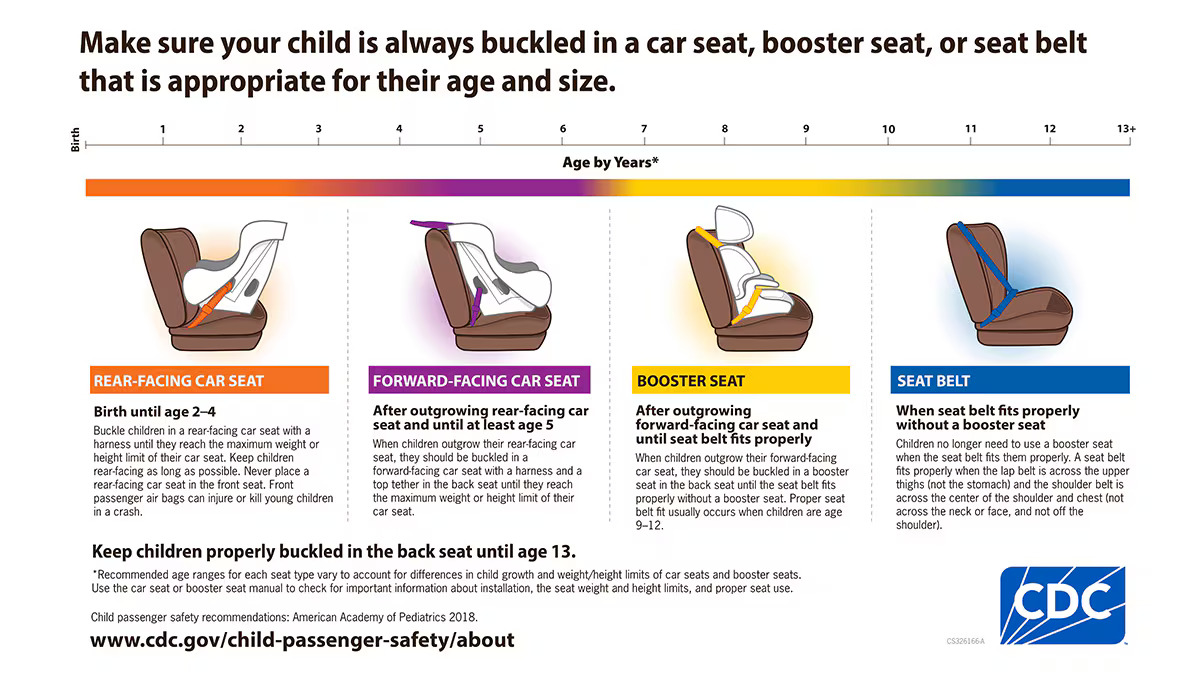
    Child Passenger Safety Week is a great time to highlight the importance of properly buckling children in car seats, booster seats, or seat belts.

    Motor vehicle crashes are a leading cause of death and injuries among children in the United States. Every year, crashes kill about 600 child passengers ages 12 years and younger and injure more than 106,000. 

    Many of these deaths and injuries are preventable. Buckling children in car seats, booster seats, and seat belts that are right for their age and size reduces the risk of serious and fatal injuries. 

    Please check out CDC’s Child Passenger Safety web page and Booster Seat Planning Guide for States, Tribes, Localities, and Territories for more information. 

    CDC supports young families and caregivers and invites you to join us in spreading this information during Child Passenger Safety Week. Here are a few things you can do:

    Child passenger safety guidelines for parents and caregivers
  • National School Bus Safety Week

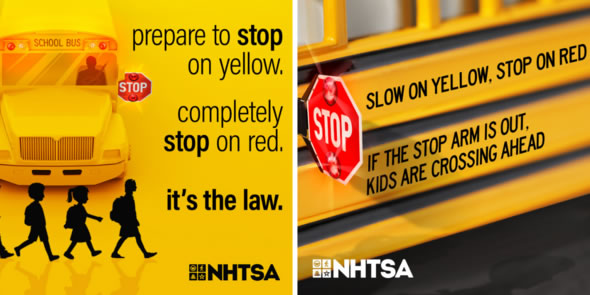
    Millions of children across the nation ride a school bus every day – that’s why school bus safety is important in every community. Use National School Bus Safety Week as an opportunity to increase messaging across all platforms. Many assets are available in English and Spanish. Get Materials Now

    Dates: October 21-25, 2024

    On behalf of the NHTSA team, thanks for your proactive school bus safety.

  • CPSC Shines Light on Home Hazards

    Home Hazards

    Over the last 50 years, we have been able to contribute to the decline in the rate of death and injury associated with consumer products through tools like SaferProducts.gov

    By visiting SaferProducts.gov, parents can view recalls on items including: 

    • Toys 
    • Pacifiers  
    • Cribs 
    • As well as many other commonly used baby items.  

    We have an extensive list of product recalls so you can make informed decisions before creating your baby registry or purchasing a baby product. 

    Whether you’re preparing for a baby to enter your home or already have children, we’re confident these resources will be useful to keeping your family safe. 

    Search for unsafe products at SaferProducts.gov.

  • CPSC Warns Consumers to Immediately Stop Using Magnetic Chess Games Due to Ingestion Hazard; Violation of the Federal Safety Regulation for Magnet Toys; Sold by JOMO

    Release Date: August 29, 2024

    Release Number:24-349

    WASHINGTON, D.C. – The U.S. Consumer Product Safety Commission (CPSC) is warning consumers to immediately stop using and dispose of Magnetic Chess Games sold by JOMO because the loose, hazardous magnets pose a risk of serious injury or death if ingested by children.

    CPSC testing determined the magnets do not comply with the requirements of the mandatory federal regulation for magnet toys.

    CPSC issued a Notice of Violation to the seller, JOMO, of China, but the firm has not agreed to recall the Magnetic Chess Games or offer a remedy to consumers.

    When high-powered magnets are swallowed, the ingested magnets can attract to each other, or to another metal object, and become lodged in the digestive system. This can result in perforations, twisting and/or blockage of the intestines, infection, blood poisoning and death.

    CPSC estimates 2,400 magnet ingestions were treated in hospital emergency departments annually from 2017 through 2021. CPSC is aware of eight deaths since 2005 through 2021 involving the ingestion of hazardous magnets, including two outside of the United States.

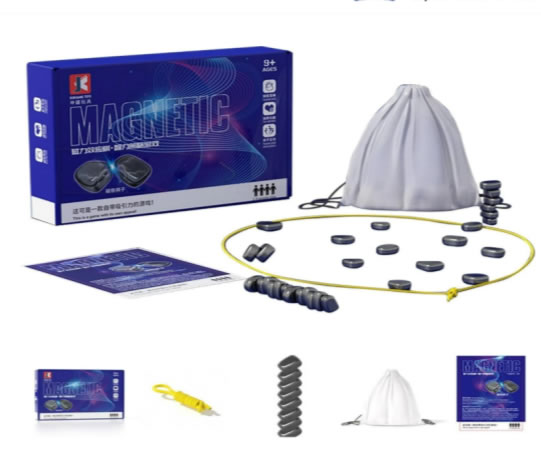
    The games were sold in a blue box with the word “Magnetic” on the front and back of the box. The game includes about 20 loose black magnets, a yellow string, and instructions for play.  Although marketed as a chess game, it does not contain chess pieces. The magnetic games were sold online at www.walmart.com for about $15.

    CPSC urges consumers to stop using the magnetic chess games immediately, take them away from children, and dispose of them or take them to your local recycling facility. Do not sell or give away these hazardous magnetic games.

    Magnetic chess game
    Magnetic chess game

    Report any incidents involving injury or product defect to CPSC at www.SaferProducts.gov.

    Individual Commissioners may have statements related to this topic.  Please visit www.cpsc.gov/commissioners to search for statements related to this or other topics.
  • Think Safety First as Kids Head Back to School

    Hi Neighbor!

    As the new school year begins, the U.S. Consumer Product Safety Commission (CPSC) is urging parents, teachers and students to watch out for hidden hazards at school.

    Every year, thousands of children are injured on playgrounds, while playing sports, or as they walk, bike, skateboard or scooter to and from school.

    Prevent injuries before they happen by following these safety tips when heading back to school:

    Playgrounds:

    Leave necklaces and clothing with drawstrings at home to reduce strangulation hazards. Check for “S” hooks, protruding bolt ends, and sharp points or edges on playground equipment. Don’t play on slides or other surfaces that are burning hot. Check that the playground has good impact surfacing such as nine inches of mulch/wood chips.

    Wear Helmets:

    Wear a helmet when biking, skateboarding, or riding a scooter to and from school, or while playing sports.

    Distracted Walking: 

    Don’t text or talk on the phone while walking. Distracted walking can be dangerous, especially near traffic and crosswalks.

    Don’t become a statistic! “Think Safety First” when heading back to school.

    Related poster:

    NSN Poster: Think Safety First as Kids Head Back to School

  • CPSC Warns Consumers to Immediately Stop Using COLOR TREE Strollers Due to Entrapment and Strangulation Hazards; Violation of Federal Safety Regulations for Strollers; Imported by Karmas Far and SmartTech Mobile USA

    Release Date: August 15, 2024

    Release Number: 24-343

    WASHINGTON, D.C. – The U.S. Consumer Product Safety Commission (CPSC) is warning consumers to immediately stop using and dispose of COLOR TREE strollers because they pose risks of entrapment and strangulation to children. The products violate the federal safety regulations for strollers because a child’s head can become entrapped between the seats and grab bars, posing a strangulation hazard.

    CPSC issued Notices of Violations to the importers, Karmas Far Inc., of Rancho Cucamonga, California and SmartTech Mobile USA Inc., of Jacksonville, Florida, both of which have been unresponsive to a recall of this product. 

    The strollers have a black frame and grab bar and a gray fabric seat and canopy. “COLOR TREE” is printed on the canopy and “Karmas Far Inc.” is printed on the back of the seat frame. The strollers were manufactured in China and sold on Karmasfar.usAmazon.comWalmart.com and Ebay.com for between $90 and $120 from November 2021 through November 2023.

    CPSC urges consumers to stop using and dispose of the strollers immediately.To destroy the products, first detach the wheels, then remove the grab bar, fabric seat and canopy. Dispose of the pieces in the trash in accordance with local garbage collection policies. Do not sell or give away these hazardous strollers.

    Stroller

    Report any incidents involving injury or product defect to CPSC at www.SaferProducts.gov.

    Individual Commissioners may have statements related to this topic.  Please visit www.cpsc.gov/commissioners to search for statements related to this or other topics.