Category: Public Service Announcement

  • CPSC CONSUMER ALERT: CAREGIVERS URGED TO USE RESTRAINTS WITH INCLINED SLEEP PRODUCTS

    U.S. Consumer Product Safety Commission – News Release

    Release Date: May 31, 2018

    Release Number: 18-171

    WASHINGTON, D.C. – The U.S. Consumer Product Safety Commission (CPSC) is reminding parents: Always create a safe sleep environment for babies in a crib, bassinet, play yard or inclined sleeper.

    In particular, CPSC is alerting consumers to be aware of hazards when infants are not restrained in inclined sleep products.

    Inclined sleep products are bassinet-like products with an inclined back to elevate the baby’s head and torso. There are many different styles of infant inclined sleep products available for infants and newborns. These can include frame-type, semi-rigid and compact inclined sleep products.

    CPSC is aware of infant deaths associated with inclined sleep products. Babies have died after rolling over in these sleep products.

    CPSC, therefore, urges consumers: Always use restraints and stop using these products as soon as an infant can roll over.

    Parents can be surprised and may not know the exact moment their baby first rolls over. Therefore always use the restraint and adjust it to fit snugly to keep the baby face up, with the baby’s face free to breathe when baby is placed in an inclined sleeper.

    CPSC encourages consumers to practice safe sleep always, and be sure to follow manufacturers’ instructions when using these sleep products.

    Caregivers should follow these simple safety steps every time baby is placed down to sleep:

    · Bare is Best: Do not add blankets, pillows, or other items to the sleep environment.

    · Back to Sleep: Always place infants to sleep on their backs.

    · Check www.cpsc.gov to find out if your crib, bassinet, play yard or inclined sleeper has been recalled.

  • Put Safety at the Top of Your List When Decorating this Holiday Season!

    As the nation gears up to decorate their homes for the holiday season, the U.S. Consumer Product Safety Commission (CPSC) reminds consumers of decorating dangers and provides tips for a safe holiday. CPSC demonstrated some of the hazards, including Christmas tree and candle fires at its laboratory in Rockville, Md. See CPSC’s broadcast quality video.

    “Safety should be part of all your decorating efforts,” said CPSC Acting Chairman Ann Marie Buerkle. “Make sure your live Christmas tree has plenty of water, keep lit candles away from flammable items, and use caution when standing on a ladder or a chair to hang decorations.”

    Holiday decorating-related injuries:

    CPSC estimates the following holiday decoration-related emergency room-treated injuries nationwide during last year’s holiday season.

    • 14,700 holiday decorating related ER-treated injuries. That’s an average of about 240 injuries per day during the holiday season of November and December!
    • The most frequent holiday decorating incidents involved falls (41%), lacerations (10%) and back strains (5%).
    • 3 deaths involving ladder falls.

    Fires involving Christmas Trees and Candles

    [ultimatetables 16 /]

    *Average annual estimates from 2012 to 2014 entire calendar year.
    **Average annual estimates from 2012 to 2014 for the months of November through December.

    Follow these CPSC safety tips to keep your family safe:

    Trees and Decorations

    1. Buying a live tree? Check for freshness. A fresh tree is green, its needles are hard to pull from branches, and its needles do not break when bent between your fingers. The bottom of a fresh tree is sticky with resin, and when tapped on the ground, the tree should not lose many needles.
    2. Setting up a tree at home? Place it away from heat sources, such as fireplaces, vents, and radiators. Heated rooms rapidly dry out live trees, be sure to monitor water levels daily and keep the tree stand filled with water. Place the tree out of the way of foot traffic and do not block doorways with the tree.
    3. Buying an artificial tree? Look for the label: “Fire Resistant.” Although this label does not mean that the tree will not catch fire, the tree is more resistant to catching fire.
    4. Decorating a tree in homes with small children? Avoid sharp or breakable decorations. Keep trimmings with small removable parts out of the reach of small children who could swallow or inhale small pieces. Avoid trimmings that resemble candy or food that may tempt a child to try to eat them.

    Candles

    1. Keep burning candles within sight. Extinguish all candles before leaving the room.
    2. Keep candles on a stable, heat-resistant surface where children and pets cannot reach them or knock them over. Place lit candles away from items that can catch fire such as trees, decorations, curtains and furniture.

    Lights

    1. Only use lights tested for safety by a nationally recognized testing laboratory. Lights for both indoor and outdoor usage must meet strict standards that testing laboratories are able to verify.
    2. Check each set of lights, new or old, for broken or cracked sockets, frayed or bare wires, or loose connections. Throw out damaged sets and do not use electric lights on a metallic tree.
    3. Check each extension cord to make sure it is rated for the intended use and is in good condition. Do not use cords with cuts or signs of fraying.
    4. Check outdoor lights for labels showing the lights have been certified for outdoor use and only plug them into a ground-fault circuit interrupter (GFCI)-protected receptacle or a portable GFCI.

    Fireplaces

    1. Use care with “fire salts,” which produce colored flames when thrown onto wood fires. Fire salts contain heavy metals that can cause intense gastrointestinal irritation and vomiting if swallowed. Keep them away from children.
    2. Do not burn wrapping paper in the fireplace. A flash fire may result because wrappings can ignite suddenly and burn intensely.

    Smoke alarms

    1. CPSC recommends having working smoke alarms on every floor of the home and in every bedroom. The early warning provided by smoke alarms saves lives.
    2. Test your smoke alarms every month to make sure they are working properly.
    3. Change batteries in smoke alarms every year.

    You can also find more fire safety tips and information in our fire safety information center.

  • Toddler suffers serious burns to his feet at splash pad

    On a very hot day in a Greenwood, IN, public park, a young toddler walked away from his mother onto the “splashpad” made of an asphalt like material.  The child began screaming and the mother ultimately put his shoes back on and took him to the doctor’s. He suffered 2nd Degree burns on the bottoms of his feet.​  Park officials are now warning parents that on hot days, ground surfaces will heat up!

    Read the article at AOL News

  • Police warn that drugs that look like candy may be present

    NEW YORK (FOX5NY)

    Authorities in a city in upstate New York are concerned that drugs that look like candy may soon hit the community.

    Police in Elmira, a city in the Southern Tier, issued a press release with the subject line “Candy warning- Danger to children” about a narcotic trend that “may be present in the area.”

    Read the details at http://www.fox5ny.com/news/256481631-story

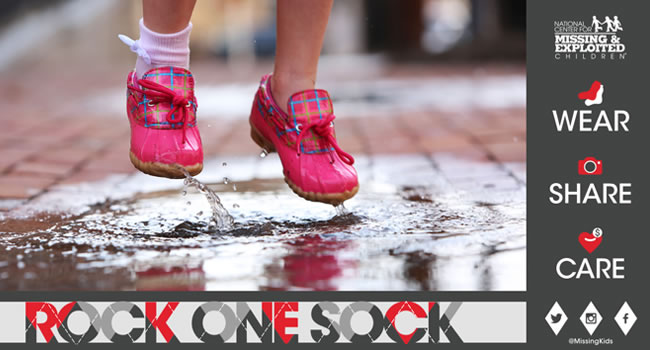
  • Rock One Sock

    Rock One Sock

    This May, we’re asking you to Rock One Sock for missing children and their families! The idea is simple – missing children’s issues don’t affect everyone directly, but anyone can show they care. When you Rock One Sock that’s your symbol of support. You can help just by raising awareness with Rock One Sock and by donating to the National Center for Missing & Exploited Children.

    Here’s how it works:
    Wear one sock and take a picture or video to show how you rocked that sock!
    Post it to social media using the hashtag #RockOneSock
    Donate to the National Center for Missing & Exploited Children to support our work to bring missing children home and challenge your friends to do the same!

    Join Us & Rock One Sock
    during the month of May to show your support in time for
    National Missing Children’s Day on May 25!
    Let’s show missing children and their families that they are not forgotten
    and that people everywhere care about them.

    Donate Here!

  • Vehicle Heatstroke Prevention

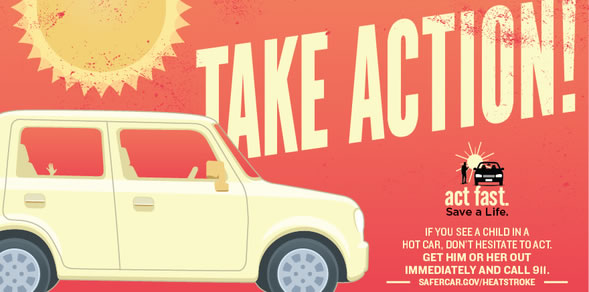
    Take Action
    Heatstroke is the leading cause of vehicular non-crash-related deaths for children under 14. In fact, each year, an average of 37 children have died from vehicle heatstroke between 1998-2015.

    While it seems like an impossible mistake to make, every parent or caregiver can potentially become distracted, and distractions often fuel this devastating situation.

    No one is immune. Yet, this tragedy is 100% preventable.

    We each have a role to play to help keep our kids safe. Help us share live-saving tips and resources with as many people as we can.

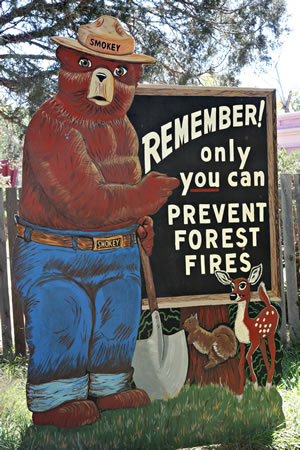
  • Smokey, the Bear, said, “Only You Can Prevent Forest Fires!” And, in my view, he was right!

    Traditionally, we don’t think of springtime as a time to be particularly aware of fires and fire safety, but it is a time when we should be especially aware. As warmer weather approaches, fun involving family, friends and kids, moves to the outdoors with activities like hiking, picnicking and camping picking up steam. The more people camp, the greater likelihood of campfires. And frequently, people who are not necessarily familiar with fires and fire safety travel to wooded areas to share that first breath of spring. Ironically, that breath could be filled with smoke if people are not careful or simply don’t know… campfire safety.

    [wrc_column grid=”3″ width=”2″ type=”start”]As any Boy Scout will tell you, before you build a fire in a campground or wooded area, consult the area’s Park Ranger, to see if there are particular burning or campfire rules or other information regarding fire associated with that particular Park. It may not be a good time to burn, period! Once you know the rules, you need to look around your proposed campfire site. Note your location–where you and your fire will be in case of any emergency! Are there hanging branches or dry brush within a radius of ten feet from your proposed fire or grill? Sparks or burning particles from your fire can travel on a current of air, so you had better make sure the vicinity of your proposed campfire is clear of any burnable debris, hanging branches, dry brush, and grass (or any other object!) that could burn and cause sparks to fly and that there is no wind! Make sure there are no flammable items in the area of your proposed campfire–and that includes clothing, chair pillows, toys, etc.[/wrc_column][wrc_column grid=”3″ width=”1″ type=”end”][/wrc_column]
    Once you have cleared all debris, (including grass and garbage) from a five-foot ring around your proposed campfire, so that cleared soil is exposed in that five-foot ring, you can place rocks around the ring to help contain the campfire, and begin to build your campfire.

    When building a fire, you should have water nearby (and if your camper or RV has one, as it should, a fire extinguisher is an added safety device). A shovel and a bucket, for dirt or water, to help douse the fire when you are done toasting or roasting or just keeping warm is also a necessity. Start to lay your fire by building a teepee of small firewood adding larger dry pieces of wood as the fire grows. Do not use “firelighter” or other flammable liquids or kerosene to start your fire as the fire may grow too large and get out of hand very quickly! Who’s watching the fire? Someone needs to keep an eye on the fire at all times. This is not a joke. If this is a sleep-over, make sure to put out your campfire completely before hitting the sack. Douse the fire with water and/or dirt and make sure the coals are stirred and cold before leaving that campfire site.

    We are fortunate to have excellent parks in America and areas where people can get out-of-doors to enjoy natural surroundings. We need to protect our woodland areas and parks, so that they can continue to be enjoyed by all. Remember Smokey’s warning, “Only YOU can prevent forest fires!” Please, if you smoke, remember to properly extinguish cigarettes while in a wooded area or park. Ninety (90) percent of wildfires in the United States are caused by humans.

  • It’s Storm Season! Are You and Your Kids Prepared?

    You’ve probably noticed the high temperatures throughout the Country lately, and the frequent severe thunderstorm warnings broadcast by television, radio and the Internet’s weather websites. Pay attention to these warnings. Storms have caused flooding recently in West Virginia, Maryland, New Jersey, Wisconsin and Minnesota, to name only a few states.

    Downpours falling into creeks, tributaries and rivers can cause flood waters to rise fast. In the end-June storm in West Virginia, at least 26 people were estimated to have died as a result of the flooding in Kanawha County. Downed trees and power lines also caused major power outages. A 4-year old was swept away by flood waters in Jackson County, and an 8-year old Ravenswood boy was killed as a result of the storm. (www.cnn.com/2016/06/24/us/west-virginia-flooding-deaths/)

    You can’t be too prepared for disastrous flooding. There are some things you can do now to help mitigate the effects of storms on you and your family. Here is a storm preparation checklist from the Rappahannock Electric Cooperative (REC) along with a few safety tips you can use:

    Things You Need Before the Storm Strikes to Be Safe:

    1. Flashlights with fresh batteries. Test your flashlights to make sure they work.
    2. Battery-powered radio or TV, with extra batteries. Again test it to make sure!
    3. Land-line phone with cord–cordless phones require electricity. But, make sure
      if you do not have a land-line that you have a cell phone and it is charged. (However,
      remember if the cell towers are down or knocked out there may be no service.)
    4. Battery-powered or wind-up alarm clock.
    5. Accessible supply of bottled water.
    6. Non-perishable foods that require no heating.
    7. Blankets, bedding or sleeping bags.
    8. First-aid kit and your prescription medications (make sure your kit is also up to date!).
    9. Hand-operated can opener (to open those canned non-perishable foods).
    10. Any special items for infants, the elderly or family members with special needs.
    11. Some hand-tools (pliers, wrench, hammer–if you need to break a window…)
    12. List of emergency phone numbers and the phone number of your power company.
    13. ID and copies of important family documents in a waterproof container.
    14. Some cash (ATMs may be unavailable).

    The REC also recommends that you NEVER touch ANY downed electric or other wire and stay at least 50 feet from ANY downed line. Do not attempt to remove any trees or debris from downed lines. Immediately report downed power lines by calling 911.

  • Hot Cars Kill Kids

    This is something everyone can do. When you get out of your car at the grocery or shopping center, look around.

    If there is someone, a child, an elderly person, or an animal, alone in a parked vehicle with the windows up…and no a.c. running (and the windows should not be completely rolled up with the a.c. running either… Noxious fumes!), call 911 and head for the mgr of the store. Tell them. It’s their pkg lot. They have to do something immediately!

    A few months ago in a Walmart pkg lot, I saw a young girl nursing her child in the driver’s seat of a car, windows rolled up, a.c. running. I tapped on the window and told her to crack a window or two…she thanked me and I breathed a sigh of relief. At least she responded positively. That won’t always happen. A woman with a special needs child in a car in the food lion parking lot in Timberville, VA., on a hot day with the windows rolled up, yelled at me for telling her. I really wish I had called 911, instead of talking to that “lady”. So calling 911 is probably the safest bet.

    You can’t believe how many “smart” people do these mindless things. There have been 18 heatstroke deaths of young children who have suffocated in hot cars so far this year. Please pass it on, be observant and do what you can.

    Thanks!

    Mind your own business and a child could die

    It’s Time to Shout About It…

    Every 10 days, vehicular heatstroke kills a child in the United States. Every 10 days, a parent loses a child to a preventable death. Since 1998, there have been 684 deaths, 23 of which happened this year. It’s time to stop vehicular heatstroke from killing our children. The time to take action is now!

    On July 31, National Heatstroke Prevention Day, NHTSA will be tweeting every 30 minutes from 7 a.m. – 7 p.m. to raise awareness about the dangers of heatstroke. Join us in this life-saving conversation with tweets and retweets of your own. Take this message to your friends, families, and followers, and tell them to share it, too.

    Who: NHTSA and YOU!

    What: #HeatstrokeKills Tweet Up

    When: Sunday, July 31, 2016, 7 a.m. – 7 p.m. ET

    Where: www.twitter.com/NHTSAgov

    How: Follow the conversation using the hashtag #HeatstrokeKills. Feel free to mention @NHTSAgov in any of your tweets and we will get back to as many questions and comments as we can! Remember to include #HeatstrokeKills in your comments so others can follow along with the conversation, too.

    Invite your friends and followers to join us and spread this important message.

    Spread the message. Make a difference. Take action. Save a life.

    Follow NHTSA on Facebook and Twitter to keep up to date with the latest recalls and safety campaigns.

  • Everyone is talking about… Zika

    It’s important, today, especially for pregnant women that we are discussing Zika. Zika is not a who, but it definitely is a “what”! Zika is a virus, and it is carried and spread by the bite of a particular mosquito infected with the virus, the Aedes aegypti mosquito. This is the mosquito also known as the carrier of Yellow Fever, the Dengue viruses, and the very same mosquito which can carry and spread the Chikungunya virus. It is important for us to be able to identify this mosquito, which is black with tiny white markings on its head, back, legs and a lyre-like white marking on its thorax… if you get that close enough to see it! Here is a link with a very good photo of Zika (and we must give credit to ABC News for publishing this photo, it is excellent!)1 http://abcnews.go.com/Health/florida-gov-declares-state-emergency-counties-zika-virus/story?id=36696887 For obvious reasons, this is a mosquito we don’t want in or around our homes or in places we go. At least in the United States, we expect mosquito prevention and eradication measures, such as pesticide spraying, may be stepped up by appropriate state or federal agencies where the zika virus is present.

    The disease itself has symptoms ranging from fever, to rash, joint pain, and conjunctivitis (red eyes). The symptoms may be mild and last several days to a week. But the effects of Zika virus in pregnant women are most troubling and they include microcephaly, a birth defect, in the offspring of pregnant women who become infected with the virus while they are pregnant. Microcephaly means that the circumference of the head of a (newborn) child is more than two standard deviations below average size for the age and sex of a child. Simply put, the virus may cause a child’s head not to be fully developed in size if his or her mother was infected with the virus while she was pregnant with that child.

    Before 2015, Zika virus outbreaks occurred in Africa, Southeast Asia, and the Pacific Islands, but the virus is now heavily present in Central and South America (although not in Chile). It is also in the United States, but not yet in Canada. The CDC and the World Health Organization note that the virus’ spread is rapidly on the increase in various countries. Governor of Florida Rick Scott has declared a health emergency in Florida as several cases of Zika have been identified and isolated there. One theory being checked also is that the disease may have been sexually transmitted, from an infected partner to another person. Although this has not yet been fully confirmed, taking precautions, especially if you are pregnant and you are traveling or have traveled to areas where Zika is present, is a very sound idea. Pregnant women are recommended not to travel to areas where the zika virus exists presently. If you are already in those areas you are encouraged to wear long-sleeved shirts, long pants and socks which cover your skin in order to prevent a bite. Stay in places where there are windows and door screens. Pay attention to instructions for applying insect repellents. There are special instructions for the use of insect repellents with children. To be more informed about this disease, please visit CDC’s Fact Sheet on Zika at cdc.gov/zika/disease-qa.html

    There is currently NO Vaccine yet developed or specific treatment advised for the Zika virus.
    _______________________
    1 ABC News, “Florida Governor Declares State of Emergency in Counties with Zika Virus”, February 3, 2016, ABC News, 47 West 66th Street, New York, NY 10023,http://abcnews.go.com/Health/florida-gov-declares-state-emergency-counties-zika-virus/story?id=36696887