Category: Child Safety

  • CPSC Report Finds 37 Percent Spike in Child Poisoning Deaths in 2021

    March 20, 2023

    From https://www.cpsc.gov/Newsroom/News-Releases/2023/CPSC-Report-Finds-37-Percent-Spike-in-Child-Poisoning-Deaths-in-2021

    Unintentional pediatric poisoning deaths spiked 37 percent in 2021, with 59 children under five years old losing their lives after gaining access to prescribed or illicit drugs. The U.S. Consumer Product Safety Commission (CPSC) encourages consumers to safeguard their families, especially those more vulnerable, from poisonings by taking control of potentially harmful household products, medications and drugs.

    This National Poison Prevention Week (March 20-24, 2023) marks 61 years since the first national observation. Child poisoning deaths have fallen by 73 percent since 1972 due to tough federal laws including the Poison Prevention Packaging Act (PPPA) of 1970 and the Child Nicotine Poisoning Prevention Act of 2015 and the cooperation of the poison prevention community. This community includes the American Association of Poison Control Centers, standard development organizations, consumer advocates, medical professionals, industry and government. 

    “Sadly, this report shows the work that still needs to be done to protect children,” said Alexander Hoehn-Saric, Chair of the U.S. Consumer Product Safety Commission. “Nearly eight out of 10 poisonings occurred in the home. Please take the time to store cleaning supplies, laundry packets, button batteries, and drugs out of children’s reach or in locked cabinets.  If you see it lying around, a child can grab and swallow it.” 

    CPSC’s latest report notes that African American children suffer a higher rate of unintentional pediatric poisoning injuries, 21.4 percent, compared to being 15.8 percent of the U.S. population. The report also found that blood pressure medications, acetaminophen, antidepressants, laundry packets and bleach are the five products most involved in unintentional pediatric poisonings.

    CPSC encourages family members and caregivers to identify hazards in the home that could be a poisoning danger and keep them out of a child’s sight and reach. 


    Safety tips for parents and caregivers:

    Drugs or Medications

    • Keep medications safely stored in a locked cabinet or box and out of the reach of children.
    • Keep medicines in their original child-resistant containers and never in unsecured containers.
    • Properly discard unfinished or unused medicines.

    Laundry Packets

    • Store laundry packets in their original containers and out of a child’s sight and reach.
    • Do not let children handle laundry detergent packets.

    Household Cleaning Supplies

    • Keep chemicals and cleaning supplies safely stored in a locked cabinet or box and out of the reach of children.
    • Keep household chemicals in their original child-resistant containers.

    Button Cell or Coin Batteries

    • Keep products with accessible batteries away from children if the battery compartments do not have a screw closure or if the compartment is damaged. 
    • Check the toys in your home to make sure battery compartments are secured.
    • Do not allow children to play with or be in contact with button cell or coin batteries.

    Individual Commissioners may have statements related to this topic.  Please visit www.cpsc.gov/commissioners to search for statements related to this or other topics.

    Release Number: 23-162
  • Holiday Toy Safety

    The majority of toy injuries and deaths are associated with choking on small parts of toys. 

    Tips for buying toys:

    • Choose age-appropriate toys that match the child’s interests and abilities. Always read and heed the label to determine whether a toy is age-appropriate for the child.
      • Consider the ages of all the children in the household, as toys with small parts, projectiles, sharp edges and other hazards can harm the younger siblings.
    • Get safety gear, including helmets, for scooters and other riding toys. Helmets should be worn properly at all times and be sized to fit.
    • Keep small balls and toys with small parts away from children younger than age 3, as these are choking hazards. Supervise older children as deaths have occurred with small balls.
    • Ensure high-powered magnets and button cell or coin batteries are kept away from young children who might mistakenly, or intentionally, swallow them, as these items pose ingestion hazards.
    • Keep balloons away from children younger than 8 years old, especially latex balloons as they can present a choking hazard.
    • Take note of safety warnings, information and labels.
    • Properly dispose of thin plastic bags and packaging, as children can suffocate.

    Before purchasing a new or used toy, be sure the toy has not been banned or recalled. Consumers can check online at www.cpsc.gov/recalls, or by downloading the free CPSC Recalls App at

    CPSC.gov/Data. If possible, consumers should register the toy with the company after purchase, so they can receive recall notices directly from the company.

  • Nearly Half of Incidents with Kids and Corded Window Coverings Resulted in Death – #GoCordless to Save Lives

    Young children can quickly and silently become strangled on pull cords, continuous loop cords, inner cords or any other accessible cords on window coverings. On this National Window Covering Safety Month, the U.S. Consumer Product Safety Commission (CPSC) urges consumers to take the time to choose cordless window blinds, shades, draperies and other window coverings.

    Affordable, cordless blinds, shades, draperies and other types of window coverings are widely available at most major retailers and online. For children’s safety, consumers should buy and install cordless window coverings (labeled as cordless) in all rooms where a child may be present.

    If consumers are unable to replace existing window coverings with cordless ones, CPSC recommends the following safety steps:

    • Eliminate any dangling cords by making the pull cords as short as possible.
    • Keep all window covering cords out of the reach of children.
    • Ensure that cord stops are installed properly and adjusted to limit the movement of inner lift cords.
    • Anchor to the floor or wall continuous-loop cords for draperies and blinds.
    • Move all cribs, beds, furniture and toys away from windows and window covering cords, preferably to another wall.

    For more information, visit CPSC’s Window Covering Safety Education Center

  • Watching Over Your Children While They Are on the Internet

    It’s been awhile since I have posted on this blog. Not that there were less safety issues related to kids–no, certainly not. Many events have intervened, Covid-19 has restricted everyone’s mobility. Family travel in order to shelter in place safely took time and planning. Masks, gloves, social distancing, use of hand-sanitizer, grocery shopping shocks–What, no toilet paper?–no Kleenex, no papertowel, no coffee filters…huh?!

    Obtaining things necessary to make sheltering in place palatable and passable for family requires some extra efforts in shopping for safety as well as shopping safely. Makes one feel a little bit as families must have during World War II, with the inability to purchase food staples (I’m talking sugar, flour, and yeast!!! They were just not on the shelves where I live!), rationing your family’s food because you don’t know if meat or poultry will be available next week and saving your pennies, because even though price gouging is forbidden, it occurs in small ways.

    Other disconcerting issues that go along with the concerns about the Pandemic’s spread are what do we do (or do we?) about people who don’t and will not wear masks…I don’t really get what that is about–are they such gorgeous human beings that they don’t want to cover their faces… are they inept at making a mask or they don’t have the materials (a bandana or scarf will work)… or are they just plain reticent or lazy? Do they not understand how germs are spread? Really?! It hurts me when I see a parent bringing children into the local grocery…and none of them have masks on. So mom is exposing the whole crew to whatever may be floating in the air while she checks the potatoes…

    This brings up another glitch in the proceedings…how about people who pick up a product with their ungloved hands (where have those hands been? And what have they touched?) and put it back on the shelves as they didn’t want it anyway… okay, now their germs are on that product (along with the shelf stocker’s, the truck unloader’s and possibly the store manager’s and soon the check-out person’s…who knows?). How many hands have touched your store’s products since they left the processing plant…before they left the processing plant? And did the people in the processing plant have Covid-19…get tested? Who knows?! I know people who wipe down their groceries with disinfectant wipes upon bringing them into their homes. I always wash fresh produce, but while it seems ridiculous, it may be necessary to protect your family!

    Back to child safety. Right NOW, parents need to be paying more attention than ever to their kids’ Internet habits. Apparently this stay-at-home period of sheltering in place has spawned some very bad actors on the Internet, including child predators. Please, moms and dads, pay attention to what your kids are looking at, chatting with, reading, playing games with, on their computers and cell phones! A sex offender in New Jersey recently solicited an 11 year-old girl to provide undressed selfies. Fortunately, this man was arrested…But how many of these bad-deed-do’ers are not found out? It takes watchful parents to keep kids safe!

  • TOY SAFETY…AGAIN!

    According to the “World Against Toys Causing Harm” (W.A.T.C.H.), a child is treated in a U.S. emergency room every three minutes for a toy-related injury. Amazing! Just because toys are on the market doesn’t mean they are safe! One thing parents, caregivers, family members and gift-givers should think about is that toys advertised on-line could be less safe than toys purchased in a brick-and-mortar store, as the purchaser doesn’t have the opportunity to touch and see the toy before purchasing it for a child.

    Also according to W.A.T.C.H., “there were 28 toy recalls in fiscal year 2017. In the recent 22-month period between January 2017 and October 2018, an estimated 3.5 million units of toys were recalled in the U.S. and Canada.” There are toys which have been recalled and then there are un-safe toys which have not been recalled… some unsafe toys show up at tag sales, yard sales and flea markets. Many are imported toys which slip by the scrutiny of the CPSC until something happens to a child interacting with that unsafe toy!

    Parents need to keep a weather eye-out for kids and nix toys that contain sharp edges or sharp protruding parts, and/or parts which if loosened on which a child could choke. Two toys WATCH identified as dangerous are the “Power Rangers Super Ninja Steel Superstar Blade” and “Marvel Black Panther Slash Claw”. Blade? Slash Claw? Just their names give me the shivers! These are toys which have no business being in the hands of young children.

    Even though the holidays are over, these are still good tips when purchasing toys for young children, from the Consumer Product Safety Commission:

    1. Check the label: Choose age appropriate toys by reading the age label on the toy. For children younger than 3, avoid toys with small parts, which can cause choking. In particular, avoid deflated or broken balloons, small parts or small balls.
    2. Get safety gear: With scooters and other riding toys, helmets and safety gear should be worn properly at all times and they should be sized to fit. Avoid riding a scooter on a street or roadway with other motor vehicles.

    Be careful with magnets: High powered magnet sets are dangerous and should be kept away from children under 14. Building and play sets with small magnets should also be kept away from small children.

    1. 2018 “Ten Worst Toys List”, press release “W.A.T.C.H. REVEALS ITS 2018 NOMINEES FOR THE “10 WORST TOYS” THIS HOLIDAY SEASON”, www. Toysafety.org, December 2018.
    2. Ibid.
    3. Ibid.
    4. Consumer Product Safety Commission website, www.cpsc.gov,https://onsafety.cpsc.gov/blog/2017/11/16/top-toy-lists-start-with-safety/

  • Unintentional Injury Still the Leading Cause of Childhood Death – CDC Releases Death Information 2016

    Once again, as it seems I do every year, I am unhappy to report that Unintentional Injury is still the leading cause of death in children in the U.S., in age groups 1-4 and 5-9 years as just reported this week for the year 2016, according to the Centers for Disease Control and Prevention’s WISQARS database statistics.

    It is a shocking set of statistics because we know many unintentional injuries are preventable–and yet, they were not prevented.  Unintentional injury remains the leading cause of death for Americans all the way through the 35-44-year age group which is when the leading causes present as malignancies and, finally in later year age groups, to heart disease.  My plea continues to be that as parents, family members and caregivers of young children, we are more “present”, more focused (without becoming helicopter parents) on children’s wellbeing, and that ultimately we are more caring of kids.

    To that end, parents, family members and caregivers need to be aware of harmful children’s toys, unsafe car doors and windows, the every-day dangers of medicines inappropriately used or stored, the same goes for home-cleaning chemicals–store (even lock)  them up high! We need to be aware of window blinds that still have pull cords, placement of baby cribs in a room away from windows, safe sleep requirements for babies, even the fiber content or the chemicals in their crib mattresses. We need to be alerted to new child seat laws and regulations as they become Law–and if we see people driving kids in the front seat, with no car seats or seat belts…we need to suggest they get a free car seat check at their nearest fire or police department. When we see tiny fingers on a conveyor belt at a check-out counter, we need to gently let the young child and accompanying caregiver know, “That’s dangerous, don’t touch!”  When you see a child playing in a store in front of the automatic doors or a parent toting a child in a basket…with the child standing, say something! Falls-causing brain damage change lives forever. Young children on bicycles and scooters need helmets too. So we need to spread the word! We need to watch children carefully when they are around water, in parks and playing in playgrounds. We need to watch children when we are cooking, doing laundry, or handling hot foods–we need to watch children crossing the street, waiting for the bus.

    We need to step up and make a public commitment and outcry against distracted driving by…almost everyone!  We need to call 911 if we see an unattended child in a car, with the windows rolled up! And the list goes on…from unsafe button batteries, to bucky balls, to cadmium-covered imported toys. The challenge to keep children safe is daunting! We need to be aware and brave in matters that concern child safety. We need to advocate for children, because they cannot advocate for themselves! We owe it to them! They are our hope for the future. Their safety, health and care is our responsibility.

  • Thanksgiving Safety Tips

    It’s Thanksgiving week! Wow, time flies! People are out there purchasing the turkeys for their Thanksgiving tables, families are travelling, preparation is underway for the big day–and for the first time in a few years, it’s chilly leading up to Thanksgiving, so there are fires in fireplaces and wood in wood-burning stoves. In my home, we are making sure to have the proper TV channels lined up for the parade and the football games! Woo hoo!

    As a member of SafeKids of the Central Shenandoah Valley, I check the SafeKids website regularly and found these very good safety tips I am republishing here. Enjoy your Thanksgiving and please, do all you can to keep children safe!

    5 Tips for a Safe and Happy Thanksgiving from SafeKids

    Whether you’re traveling by car, or train or plane, coming home for the holidays is exciting.

    Before you pack up the car and bundle up the kids, put the turkey and pies in the oven – or whatever else is on your list before you go – here are five quick tips to help you and your family stay safe for the holiday.

    1. In the car: If you’re like me, colder weather means lots of layers of clothing. But remember, bulky winter clothes and coats can keep a car seat from doing its job. Instead, cover your child with a thick blanket to stay warm after you’ve securely strapped him or her into the car seat.
    2. In the kitchen: At Thanksgiving, things are guaranteed to get a little busy. To help keep hot food out of the reach of little hands, be sure that pot handles and other dishes aren’t close to the edge of the counter or table where they could be pulled down by curious kids.
    3. By the fireplace: If there’s a fireplace in the home, be sure to check that it’s protected by a sturdy screen – and remember that glass screens can take a while to cool down even after the fire has gone out.
    4. Wherever the medicine is stored: Kids get into medication in all sorts of places, like in purses and nightstands. In fact, in 67 percent of medicine-related ER visits, the medicine was within reach of a child, such as in a purse, left on a counter or dresser, or found on the ground. A good rule of thumb: “Up, up and away.” Keep medications out of reach and out of sight.
    5. In the room where you sleep: For many of us, holiday travel means we’ll be spending the night away from home. While you might be fine sleeping on the couch or an air mattress, make sure your baby always sleeps in a safe crib, bassinet or pack-n-play.

    Two more tips from BeChildSafe

    1. If you light candles to create a festive mood, be sure to douse all candles if you are leaving the house or going to sleep.
    2. If you are serving or consuming alcoholic beverages over the holidays, please don’t leave them unattended where young children can pick them up and drink them.  If this occurs, please call 911 right away or get your child to the nearest Hospital Emergency Room.

    Thank you– and have a safe Thanksgiving from all of us at BeChildSafe.org.

  • Halloween Safety Tips From SafeKids

    Here are some very good tips for parents, caregivers and family members about Halloween Safety for children, from SafeKids. SafeKids, like BeChildSafe.org, is devoted to keeping all children safe.

    Everyone loves a good scare on Halloween, but not when it comes to child safety. There are several easy and effective behaviors that parents can share with kids to help reduce their risk of injury.

    HALLOWEEN SAFETY
    

    Hard Facts

    On average, children are more than twice as likely to be hit by a car and killed on Halloween than on any other day of the year.

    Top Tips

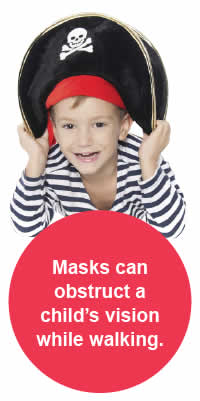
    1. Decorate costumes and bags with reflective tape or stickers and, if possible, choose light colors. Since masks can sometimes obstruct a child’s vision, try non-toxic face paint and makeup whenever possible.
    2. Have kids use glow sticks or flashlights to help them see and be seen by drivers.
    3. Children under the age of 12 should not be alone at night without adult supervision. If kids are mature enough to be out without supervision, remind them to stick to familiar areas that are well lit and trick-or-treat in groups.
    4. Popular trick-or-treating hours are 5:30 p.m. to 9:30 p.m. so be especially alert for kids during those hours.
    5. When selecting a costume make sure it is the right size to prevent trips and falls.

    View Safety Flyer from Safe Kids

    Safe Kids Halloween Flyer

  • Safe Sleep for Babies!

    Today, I received an email from the Centers for Disease Control and Prevention about a roundtable webinar that will be held in a week for health professionals on Safe Sleep for Babies which BeChildSafe.org will lean in and listen to, but I wanted to share the statistics CDC shared with the public just now about Safe Sleep and why it’s so important to make sure babies have a safe sleep environment:

    “Each year about 3,500 babies in the United States die suddenly and unexpectedly before they reach their first birthday due to sleep-related deaths. These tragedies, called sudden unexpected infant death (SUID), often occur during sleep or in the baby’s sleep area, and include sudden infant death syndrome (SIDS), accidental suffocation and strangulation in bed, and other deaths from unknown causes.”

    “In the 1990s, a dramatic reduction in sleep-related infant deaths followed the release of recommendations and campaigns including Back to Sleep (now known as Safe to Sleep®). However, rates of SUIDs have remained relatively flat since 2001 and … disparities persist. Differences in how the causes of these deaths are reported limit our understanding and prevention efforts.” (CDC, Public Health Grand Rounds, will be held October 23, 2018 at 1:00 p.m.)

    Following the Grand Roundtable, we will publish recommendations on Safe Sleep for Babies, some of which are:

    Make sure baby is lying on his/her back.

    If a blanket is necessary, have only one cover in the baby’s bed.

    Remove toys and stuffed animals and anything baby could choke on, from the bed.

    Do not place the crib or baby bed next to a window or where there are window blinds.(if you have window blinds, make sure if there are blind cords, all blind cords are tied up high where baby cannot reach)

    Make sure that there are no pockets between the crib mattress and the crib sides, head and footboards that baby could roll into and become stuck.

    Make sure your crib mattress pad is fitted and will not allow baby to get tangled.

    Make sure crib closures are safely tightened (bolt/nuts/screws) with no gaps.

    Make sure crib slats are not so wide baby can get stuck between them.

    Do not place the baby in bed with you and/or with you and your partner.