Author: Marianne Halterman

  • Important Recall Info That MAY Affect Your Car Seat

    Recall Date: November 28 2022

    NHTSA Campaign Number: 22C007000

    Recall Summary

    Name of Product: Child Seat

    Manufacturer: JD E-Commerce America Limited

    Hazard: A missing installation label may result in an improperly installed child seat, increasing the risk
    of injury in a crash.

    Potential Number of Units Affected: 174

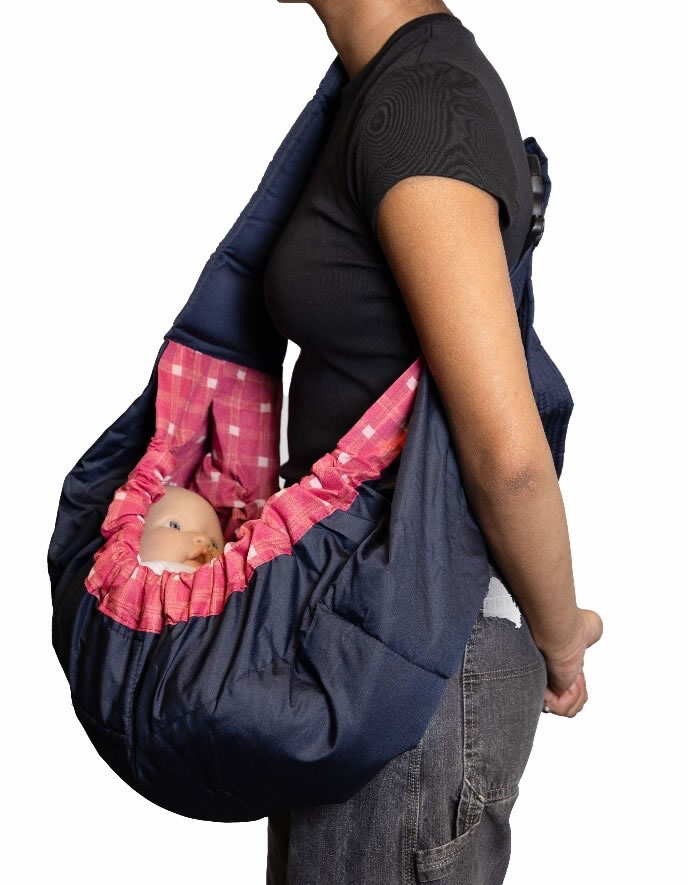
    Sumary: JD E-Commerce America Limited (JD E-Commerce) is recalling certain Marainbow Portable Infant Safe Seat child seats. The installation labels display incorrect instructions. The child seat’s design also prohibits it from being installed properly. As such, these child seats fail to comply with the requirements of Federal Motor Vehicle Safety Standard number 213, “Child Restraint Systems.”

    Remedy:

    No remedy has been established at this time. The manufacturer has not yet provided a schedule for recall notification. Owners may contact JD E-Commerce customer service at 1-946-932-0299.

    Notes: Owners may also contact the National Highway Traffic Safety Administration Vehicle Safety Hotline at 1-888-327-4236 (TTY 1-800-424-9153), or go to www.nhtsa.gov.

    Associated Documents:

    Recall Acknowledgement
    RCAK-22C007-5813.pdf 647.107KB
    https://static.nhtsa.gov/odi/rcl/2022/RCAK-22C007-5813.pdf

    Noncompliance Notice 573 Report
    RCLRPT-22C007-2768.PDF 213.731KB
    https://static.nhtsa.gov/odi/rcl/2022/RCLRPT-22C007-2768.PDF

  • Green Sprouts Recalls Toddler’s Stainless Steel Bottles and Cups Due to Lead Poisoning Hazard

    Recall Date: November 23, 2022

    Recall number: 23-711

    Recall Summary

    Name of Product: Green Sprouts Stainless Steel Straw Bottles, Sippy Cups and Sip & Straw Cups

    Hazard: The recalled stainless-steel bottles and cups bottom base can break off, exposing a solder dot that contains lead, posing a lead poisoning hazard to the child.  Lead is toxic if ingested by young children, and can cause adverse health effects.

    Remedy: Refund

    Consumer Contact: Green Sprouts at 800-876-1574 from 9 a.m. to 5 p.m. ET Monday through Friday, email at ContactUs@GreenSprouts.com or online at https://greensproutsbaby.com/pages/swssbrecall or at www.GreenSprouts.com and click on the ”Safety” link at the bottom of the home page for more information.

    Recall Details

    Units: About 10,500

    Description: This recall involves 6 oz and 8 oz Green Sprouts Stainless Steel cups and bottles with tracking numbers 29218V06985, 35719V06985, and 33020V06985, which can be found on the bottom of the base. The recalled double-walled stainless steel bottles were sold in aqua, pink, green, and navy colors with one of three closure options: (1) a silicone sippy spout with a colored plastic lid, collar and handle (2) a silicone sippy spout and a straw spout with colored plastic lid, collar and handle, or (3) a silicone straw with plastic screw-on flip cap. The tracking number is printed on the bottom base. The bottles were sold in one of two sizes as indicated:

    6 ozStainless Steel Sippy Cup29218V06985 or 35719V06985
    6 ozStainless Steel Sip & Straw Cup33020V06985
    8 ozStainless Steel Straw Bottle29218V06985 or 35719V06985

    Remedy: Consumers should immediately take the recalled stainless steel bottles and cups away from children and discard the bottles and cups. Contact Green Sprouts for a full refund in the form of store credit or your money back. Green Sprouts is contacting all known purchasers directly.

    Incidents/Injuries: The firm has received seven reports of incidents of the bottles’ base breaking off exposing the solder dot. No injuries have been reported.

    Sold At: Buy Buy Baby and Whole Foods stores nationwide and online at amazon.com, www.buybuybaby.com and www.bedbathandbeyond.com from January 2020 through September 2022 for between $14 and $19.

    Importer(s): Green Sprouts Inc., of Asheville, North Carolina

    Distributer(s): Green Sprouts Inc., of Asheville, North Carolina

    Manufactured In: China

  • CPSC Warning: Stop Using Otteroo LUMI and MINI Infant Flotation Rings Due to Drowning Hazard; One Infant Death Reported

    WASHINGTON, D.C. – The U.S. Consumer Product Safety Commission (CPSC) is warning consumers about the risk of drowning with LUMI and MINI infant flotation rings sold by Otteroo Corporation (Otteroo). CPSC urges consumers to immediately stop using them, as well as the discontinued models of Otteroo infant flotation rings: the Version 1, sold from 2014 to 2015, and the Version 2, sold from 2015 to 2018. The Commission has found that the public health and safety requires this notice to warn the public quickly of the hazard.

    CPSC evaluated the Otteroo infant flotation rings and found that they can deflate during use or storage, causing the child occupant to slide out of the product into the water, which can lead to serious injury or death. One infant has died by drowning and one infant was seriously injured after slipping through an Otteroo infant flotation ring. The death occurred in 2020 in Maine and involved a six-month old. The serious injury occurred in 2020 in New York and involved a three-month old.

    CPSC is aware of 68 incidents where infants slipped through the head opening of the flotation ring and required immediate rescue by a caregiver.

    The Otteroo infant flotation rings have been sold nationwide since January 2014 for between $24 to $40. Otteroo has refused to agree to CPSC’s request for an acceptable recall.

    The Otteroo infant flotation rings are currently sold exclusively on www.otteroo.com. They were previously sold on Zulily.com and Amazon.com.

    The MINI and LUMI are clear, inflatable rings designed to fit around the neck of an infant. “otteroo” is printed on the top of the rings. The rings also have an illustrated white otter with an inflatable ring around its neck. Earlier models also are inflatable rings bearing the word “otteroo” and an illustrated white otter, and they are constructed of both clear and blue plastic material.

    CPSC urges consumers not to buy the Otteroo infant flotation rings. If you already own one or purchased one, do not use it due to the drowning hazard and dispose of the product immediately. Report incidents with the Otteroo infant flotation rings and any dangerous product or a product-related injury to CPSC at www.SaferProducts.gov.

    CPSC urges consumers NOT to resell or donate the Otteroo infant flotation rings so other infants are not put in danger by the hazard.

    Under section 6(b) of the Consumer Product Safety Act, the CPSC is required to include with this press release any comments from the manufacturer or a summary thereof.  The company objects to this press release.  As summarized, the firm states Otteroo neck floats come with thorough safety instructions and warnings which, if followed, will ensure safe use.  The firm states that these warnings make it clear that neck floats are meant to be used under close and constant adult supervision.  The firm states that like all inflatables, Otteroo neck floats are subject to damage, including holes which will result in deflation.  Otteroo states that it instructs parents to check for air leaks before each use because deflation can pose a drowning hazard if the adult is not within arm’s reach of the baby at all times.  The firm states that while it is deeply saddened by the two events mentioned in the press release, it appears that in both incidents, the infants were left alone in the bath for an extended period of time.  The firm states that furthermore, there are inconsistencies and limited evidence concerning whether Otteroo neck floats were directly responsible.

    CPSC Chair and Commissioner Statements

    Commissioner Richard Trumka

  • Children’s Rainbow Stacking Toys Recalled Due to Choking Hazard; Manufactured by Professor Puzzle

    Recall Date: November 17, 2022

    Recall number: 23-049

    Recall Summary

    Name of Product: Rainbow Stacking Toys

    Hazard: The toy’s information sticker can become exposed and detach, posing a choking hazard to young children.

    Remedy: Refund, Repair

    Consumer Contact: Professor Puzzle toll-free at 888-211-9207 from 9 a.m. to 4 p.m. ET, Monday through Friday, email at Safety@professorpuzzle.com, or online at http://www.professorpuzzle.com/productrecall or www.professorpuzzle.com and click “Product Recall” at the bottom of the page for more information.

    Recall Details

    Units: About 2,350 (In addition, about 600 were sold in Canada)

    Description: This recall involves Professor Puzzle’s rainbow stacker 6-piece toys. The 7-inch or 11-inch wooden toys were sold in two pastel color combinations: Green/blue or pink/blue. Model numbers 8739 or 8741 and date code 04/22 are printed on a sticker on the underside of the small center piece of the toy and on the back of the packaging.

    Remedy: Consumers should immediately take the recalled stacking toys away from children, stop using them and contact Professor Puzzle for instructions on how to remove and dispose of the sticker or to receive a refund of $20 for the 11-inch toy and $15 for the 7-inch toy. Consumers will be asked to return the product in a prepaid mailer. Consumers can also return the product to the retail store for a full refund of the purchase price.

    Incidents/Injuries: None reported

    Sold At: Home Goods, Homesense, Marshalls, TJ Maxx, and Winners stores nationwide from August 2022 through November 2022 for between $15 and $20.

    Importer(s): Professor Puzzle Ltd, of United Kingdom

    Manufactured In: China

  • The William Carter Company Recalls Infant’s Yellow Footed Fleece Pajamas with Animal Graphic Due to Puncture and Laceration Hazards

    Recall Date: November 17, 2022

    Recall number: 23-048

    Recall Summary

    Name of Product: Infant’s Yellow Footed Fleece Pajamas with Animal Graphic

    Hazard: Small metal wire pieces can be found in the pajamas, posing puncture and laceration hazards to young children.

    Remedy: Refund

    Consumer Contact: Carter’s at 800-692-4674 from 9 a.m. to 5:30 p.m. ET Monday through Friday or online at www.carters.com and click on Product Recalls at the bottom of the page or www.cartersrecall.com for more information.

    Recall Details

    Units: About 50,800 (In addition, about 200 were sold in Canada)

    Description: This recall involves Carter’s infant’s  one-piece fleece, footed pajamas. The recalled pajamas are yellow with an all over heart design and a pink animal graphic. They were sold in children’s sizes 12M, 18M, and 24M. Style number 1O102410 is printed on the front of the care tag sewn on the inside of the pajamas, and the UPC number is printed on the back of the same care tag. The UPC numbers included in the recall are 195861313861, 195861313878, and 195861313885. The style number and UPC number are also printed on the price tag.

    Remedy: Consumers should immediately take the recalled infant footed fleece pajamas away from children and return them to a Carter’s store location for a full refund in the form of a gift card.  Consumers can also contact Carter’s to request a free return label and envelope to return the pajamas for a refund in the form of an electronic gift card.

    Incidents/Injuries: None reported

    Sold At: Carter’s, Kohl’s, Macy’s, Belk, Boscov’s and other stores nationwide and online at www.carters.com from July 2022 through September 2022 for about $22.

    Importer(s): The William Carter Company, of Atlanta, Georgia

    Manufactured In: Cambodia

  • Mockingbird Recalls Single-to-Double Strollers Due to Fall Hazard

    Recall Date: November 10, 2022

    Recall number: 23-042

    Recall Summary

    Name of Product: Mockingbird Single-to-Double Strollers

    Hazard: The lower side of the stroller frame can crack, posing a fall risk to children in the stroller.

    Remedy: Repair

    Consumer Contact: Mockingbird toll-free at 877-274-3240 from 9 a.m. to 5 p.m. ET Monday through Friday, email recall@hellomockingbird.com, or online at www.hellomockingbird.com/recall or www.hellomockingbird.com and click on “Product Recall” at the bottom of the page for more information.

    Recall Details

    Units: About 149,000

    Description: This recall involves Mockingbird Single-to-Double Strollers. Mockingbird Single-to-Double Strollers are made of aluminum and are black or silver in color. The seats are black, and the canopies are available in black, light blue, dark blue, pink and light green. The recall includes only Mockingbird Single-to-Double Strollers with a lot number between 20091 and 22602. The lot number is a five-digit number that can be found on the white product label located on the inner left side of the stroller frame near the top of the basket.

    Remedy: Consumers should immediately stop using the recalled Single-to-Double strollers and contact Mockingbird to receive a free frame reinforcement kit, which includes two frame clamps that attach to the sides of the stroller to reinforce the frame. Mockingbird is contacting all known purchasers directly.

    Incidents/Injuries: The firm has received 138 reports of cracks in the frame, including eight injuries involving cuts, scratches or bruising to children in the strollers.

    Sold At: Target stores nationwide and online at hellomockingbird.com, babylist.com, goodbuygear.com and target.com from March 2020 to September 2022 for between $395 and $450.

    Importer(s): Mockingbird LLC, of New York

    Manufactured In: China

  • Keep Babies’ Sleep Space Safe

    Whether At Home or Traveling for the Holidays CPSC Reminds Parents to Keep Babies’ Sleep Space Safe

    CPSC Joins Members of Congress, Safety Advocates at Chicago Lurie Children’s Hospital

    WASHINGTON, D.C. – With the holiday season fast approaching and families preparing to gather, the U.S. Consumer Product Safety Commission (CPSC) is teaming up with members of Congress and safety advocates to remind adults to keep the little ones safe – whether at home or at grandma’s house – by always creating a safe sleep space.

    Chair Alex Hoehn-Saric joined pediatric experts from Lurie Children’s Hospital and American Academy of Pediatrics (AAP), child safety advocates from Kids in Danger (KID), Safe Kids Worldwide, and Consumer Federation of America, and Members of Congress to raise awareness of the best safe sleep practices for babies and highlight new laws and regulations aimed at creating a safer marketplace to keep all babies safe.

    “I’m excited to be working alongside these trusted collaborators to expand our reach and provide parents, grandparents, and caregivers with the best safe sleep practices for their babies during the holidays and all year,” said CPSC Chair Alex Hoehn-Saric. “Together we can reduce these tragic deaths and injuries and create a safer marketplace.”

    This event was held following a year of aggressive Congressional and CPSC action to protect babies from product hazards.  These steps include:

    • Infant Sleep Products Rule. CPSC’s Infant Sleep Products Rule went into effect in June 2022, and requires all new infant sleep products to have a sleep surface angle of 10 degrees or lower and to meet at least one of the existing standards for sleep products: bassinets and cradles, play yards, or cribs.

    Since the rule went into effect, CPSC has sent more than 125 letters to businesses to alert them of their obligation to comply with the new requirements; and, in more than 70 instances, specific infant sleep products were identified that could be subject to the rule. Subsequently, 26 products were removed from sale, helping to protect consumers. Additionally, CPSC has recently issued a notice to one firm, Dock-a-tot, for manufacturing a non-compliant infant sleep product after June 23, 2022, an apparent violation of the ISP rule.

    • Safe Sleep for Babies Act. CPSC has written to retailers, including e-commerce platforms, urging them to comply with the requirements of the Safe Sleep for Babies Act, which was enacted into law this summer, and goes into effect on November 12th.  The Act bans padded crib bumpers and inclined sleep products, regardless of date of manufacture. Last week, CPSC wrote to 45 retailers urging them to comply with these requirements with respect to crib bumpers, and CPSC will be monitoring the market for inclined products.  
    • Additional safety measures. In addition to these steps forward on infant sleep products, major steps were taken to improve the marketplace for baby safety.  Congress recently enacted Reese’s Law, aimed at protecting children from hazardous button cell batteries.  CPSC also issued final rules establishing safety standards for crib mattresses, magnets, window coverings, and clothing storage units.

    “Being a new parent can be hard enough and keeping our newborns safe is a goal we all share. Thanks to the dedication of my colleagues, the dynamic leadership of U.S. Consumer Product Safety Commission Chair Alex Hoehn-Saric, and the urgency to protect our children, President Biden was able to sign into law multiple pieces of legislation that will protect babies and promote safe sleep practices,” said Congresswoman Jan Schakowsky. “Nearly 200 deaths have been linked to crib bumpers and infant inclined sleep products. Thanks to the Safe Sleep for Babies Act, which I introduced with Rep. Tony Cárdenas, these dangerous products will be banned, providing families with the peace of mind they deserve when purchasing new products for their newborns.”

    “I’m glad CPSC Chair Alex Hoehn-Saric will be traveling to Chicago to raise awareness around the dangers families may not be aware of during the holiday season,” said Congresswoman Robin Kelly. “Recent CPSC actions against infant sleeping products have been key to ensuring businesses are removing harmful products and babies are kept safe. Additionally, while the recent passage of my bill, Reese’s Law, will help ensure future products with button batteries are safer; many homes have remotes, holiday decorations, and toys that contain button batteries and can be easily opened, and pose life threatening injuries if the batteries are ingested.”

    CPSC’s latest nursery product injury and death report shows most nursery-product infant deaths occurred in a cluttered sleep space, when soft bedding was added to the cribs, playpens/play yards or bassinets/cradles. On average there are almost 100 infant deaths annually in unsafe sleep environments involving nursery products.  CPSC is reminding caregivers to follow these practices to keep babies’ sleep space safe:

    1. Back to Sleep: Always place the baby to sleep on their back to reduce the risk of sudden unexpected infant death syndrome (SUID/SIDS) and suffocation.
    2. Bare is Best: Always keep the baby’s sleep space bare (fitted sheet only) to prevent suffocation. Do not use pillows, padded crib bumpers, quilts or comforters.
    3. Transfer the baby to a firm, flat crib, bassinet, play yard or bedside sleeper if they fall asleep in a swing, bouncer, lounger, or similar product.
    4. Inclined products, such as rockers, gliders, soothers, and swings should never be used for infant sleep, and infants should not be left in these products unsupervised, unrestrained, or with soft bedding material, due to the risk of suffocation.

    RECALLS: Always check to see if any purchased baby nursery products have been recalled, which includes any secondhand products.  Remember, babies rely on adults to keep them safe. Sign up today at CPSC.gov.

  • CPSC Approves New Federal Safety Standard for Dressers and Other Clothing Storage Units; Rule Aims to Reduce Injuries and Deaths Associated with Tip Overs

    [CPSC News Release dated 10/19/2022]

    WASHINGTON, D.C. – The U.S. Consumer Product Safety Commission (CPSC) has approved a new federal mandatory safety standard for clothing storage units (CSUs) that will significantly change the way clothing storage units are tested and labeled. Young children are most at risk of injury or death from tip over incidents with this type of furniture, which includes products such as chests, bureaus, dressers, armoires, wardrobes, chests of drawers, drawer chests, chifforobes and door chests.      

    CPSC staff is aware of 234 fatalities resulting from clothing storage unit tip overs from January 2000 through April 2022, including 199 child fatalities.  Staff estimates that there were 84,100 tip-over-related injuries (an estimated annual average of 5,300 injuries) with CSUs treated in a U.S. hospital emergency department from 2006 through 2021.  Of these, staff estimates that 72 percent were injuries to children.  From January 2000 through July 2022, there have been 43 recalls in response to tip-over hazards of CSUs, involving more than 21 million units.

    “Each year, children are killed or injured in dresser tipover incidents. The standard set today will ensure that dressers are safer and fewer children are at risk,” said CPSC Chairman Alex Hoehn-Saric. “I want to thank the members of Parents Against Tipovers and other consumer advocates who have spent years pushing the agency to set a strong standard that will protect children going forward. I am pleased that the CPSC was able to achieve that goal and commend the staff for their hard work and dedication.”

    The new standard would require CSUs to exceed minimum stability requirements and display important safety information and performance and technical data. The stability requirements reflect real-world factors, like multiple open drawers, drawers containing clothing-representative loads, angling CSUs to replicate the effects of placement on carpet and forces a child exerts while climbing or pulling on a CSU, all of which are shown to occur during CSU tip overs and contribute to their instability.

    The standard also includes test methods for CSUs with interlocks.  Interlocks can improve CSU stability, by preventing all drawers from being opened at once. In addition to the stability requirements, the new standard requires that CSUs are marked and labeled with safety and identification information and display a hang tag providing performance and technical data about the product’s stability.

    CPSC’s Anchor It! campaign works to raise awareness of the dangers to children from furniture tip overs.  See www.anchorit.gov for more information on how to prevent tip-over incidents and save children’s lives.

    The Commission voted 3 to 1 to approve the standard on October 19, 2022. It takes effect 180 days after it is published in the Federal Register.

    CPSC Chair and Commissioner Statements: 

    Chair Hoehn-Saric Statement

    Commissioner Feldman Statement

    Commissioner Trumka Statement

    Commissioner Boyle Statement

  • Holiday Toy Safety

    The majority of toy injuries and deaths are associated with choking on small parts of toys. 

    Tips for buying toys:

    • Choose age-appropriate toys that match the child’s interests and abilities. Always read and heed the label to determine whether a toy is age-appropriate for the child.
      • Consider the ages of all the children in the household, as toys with small parts, projectiles, sharp edges and other hazards can harm the younger siblings.
    • Get safety gear, including helmets, for scooters and other riding toys. Helmets should be worn properly at all times and be sized to fit.
    • Keep small balls and toys with small parts away from children younger than age 3, as these are choking hazards. Supervise older children as deaths have occurred with small balls.
    • Ensure high-powered magnets and button cell or coin batteries are kept away from young children who might mistakenly, or intentionally, swallow them, as these items pose ingestion hazards.
    • Keep balloons away from children younger than 8 years old, especially latex balloons as they can present a choking hazard.
    • Take note of safety warnings, information and labels.
    • Properly dispose of thin plastic bags and packaging, as children can suffocate.

    Before purchasing a new or used toy, be sure the toy has not been banned or recalled. Consumers can check online at www.cpsc.gov/recalls, or by downloading the free CPSC Recalls App at

    CPSC.gov/Data. If possible, consumers should register the toy with the company after purchase, so they can receive recall notices directly from the company.

  • Nearly Half of Incidents with Kids and Corded Window Coverings Resulted in Death – #GoCordless to Save Lives

    Young children can quickly and silently become strangled on pull cords, continuous loop cords, inner cords or any other accessible cords on window coverings. On this National Window Covering Safety Month, the U.S. Consumer Product Safety Commission (CPSC) urges consumers to take the time to choose cordless window blinds, shades, draperies and other window coverings.

    Affordable, cordless blinds, shades, draperies and other types of window coverings are widely available at most major retailers and online. For children’s safety, consumers should buy and install cordless window coverings (labeled as cordless) in all rooms where a child may be present.

    If consumers are unable to replace existing window coverings with cordless ones, CPSC recommends the following safety steps:

    • Eliminate any dangling cords by making the pull cords as short as possible.
    • Keep all window covering cords out of the reach of children.
    • Ensure that cord stops are installed properly and adjusted to limit the movement of inner lift cords.
    • Anchor to the floor or wall continuous-loop cords for draperies and blinds.
    • Move all cribs, beds, furniture and toys away from windows and window covering cords, preferably to another wall.

    For more information, visit CPSC’s Window Covering Safety Education Center